

Suomenlinna Day Trip
A Suomenlinna Day Trip featuring three empires, one 15-minute ferry ride, and a bonus trip at golden hour we never planned for
A four block walk from our hotel put us at Helsinki's Market Square (Kauppatori), and from there it was just a few more minutes past a row of yellow tents to the ferry pier for our Suomenlinna Day Trip. The Suomenlinna ferry departs from the same dock area, right at the end of the tents and just before the public sauna and swimming pool along the harbor. It's an easy walk, and impossible to miss once you're looking for it.
Getting There Is Half the Experience
The ferry ride itself is under 15 minutes. If you're on Helsinki's day ticket (€9, unlimited public transport for the day - a single one-way fare is €3.30), effectively free once you've already paid for it. You're free to move around the boat the entire ride, and I took full advantage, heading up to the open-air top deck to shoot pictures and video the whole way.
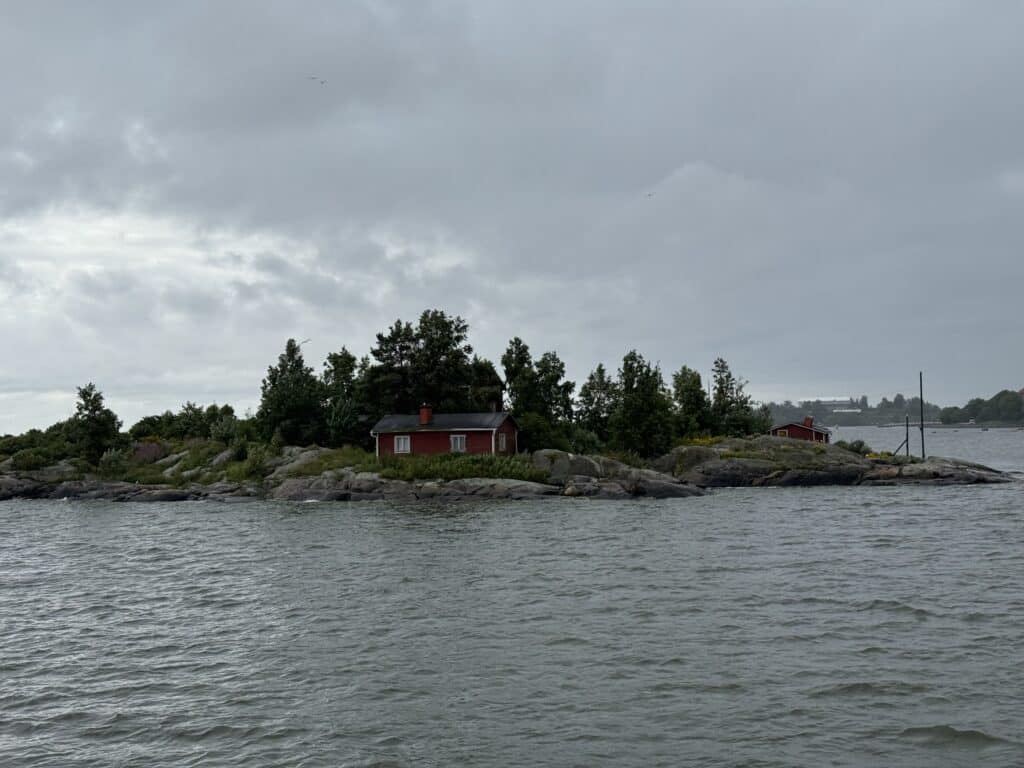
Almost as soon as you pull away from the harbor, the archipelago opens up - we must have passed a dozen small islands in that short crossing, each with its own little cluster of houses or structures. One had a single small red cottage sitting alone on the rock.
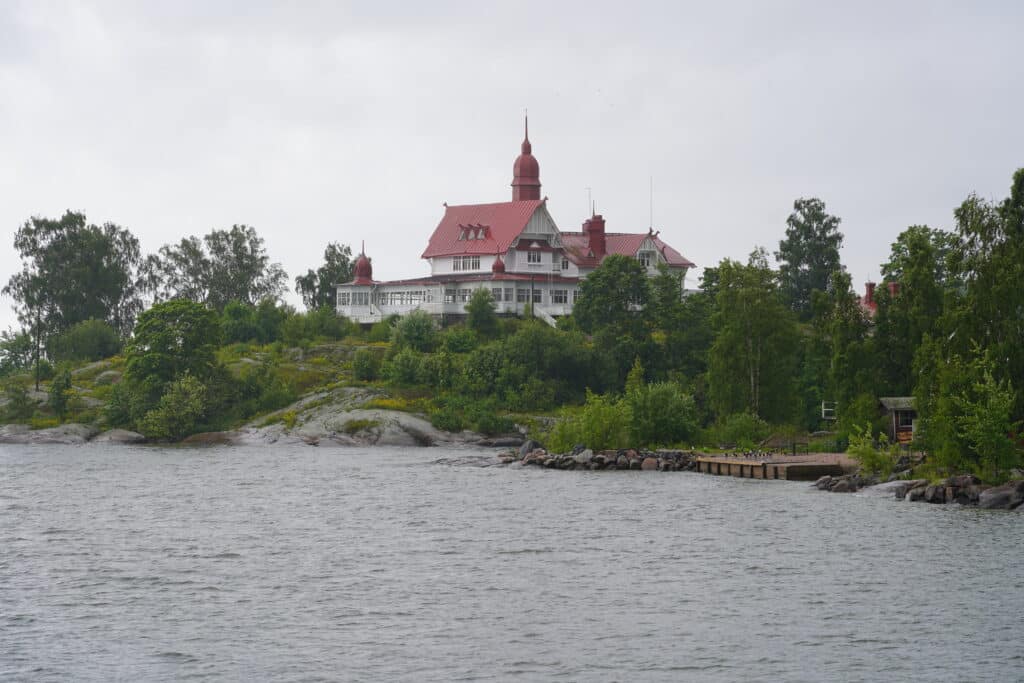
Another had a much larger building with a wraparound balcony, a red roof, and a steeple rising behind it.
As the ferry gets closer, Suomenlinna's white church comes into full view, sitting above the fortress and the water - genuinely one of the best moments of the ride.
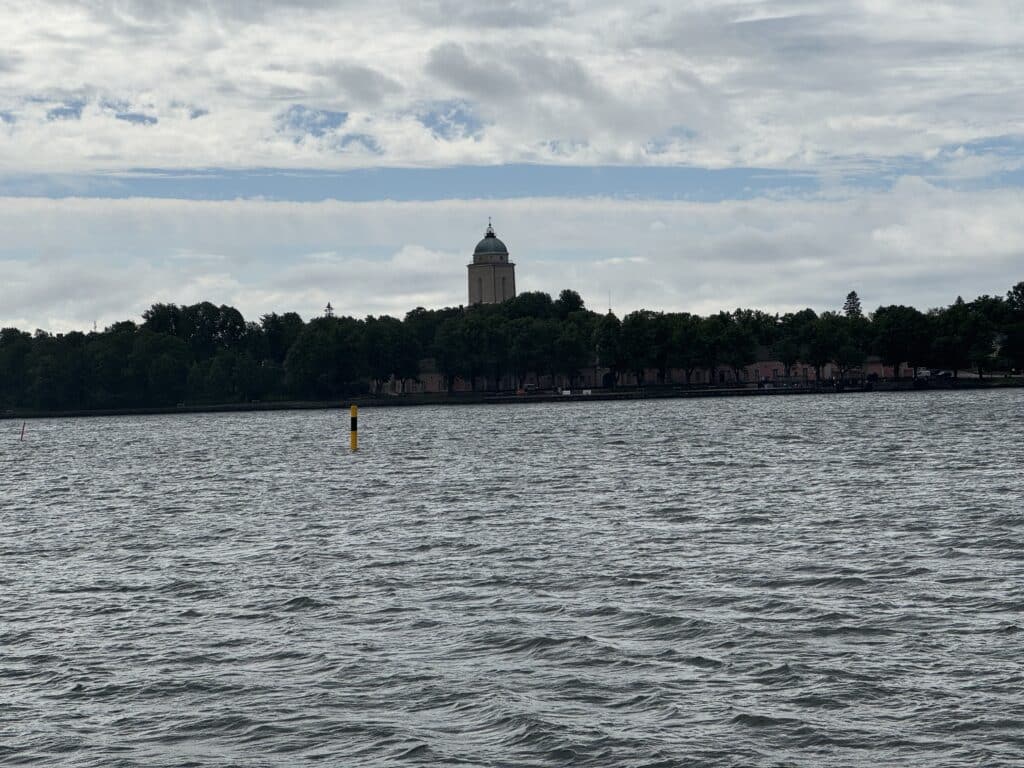
A large bridge crosses in front of the island, with open water to the left the whole way in.
Arriving to a Navigation Hiccup
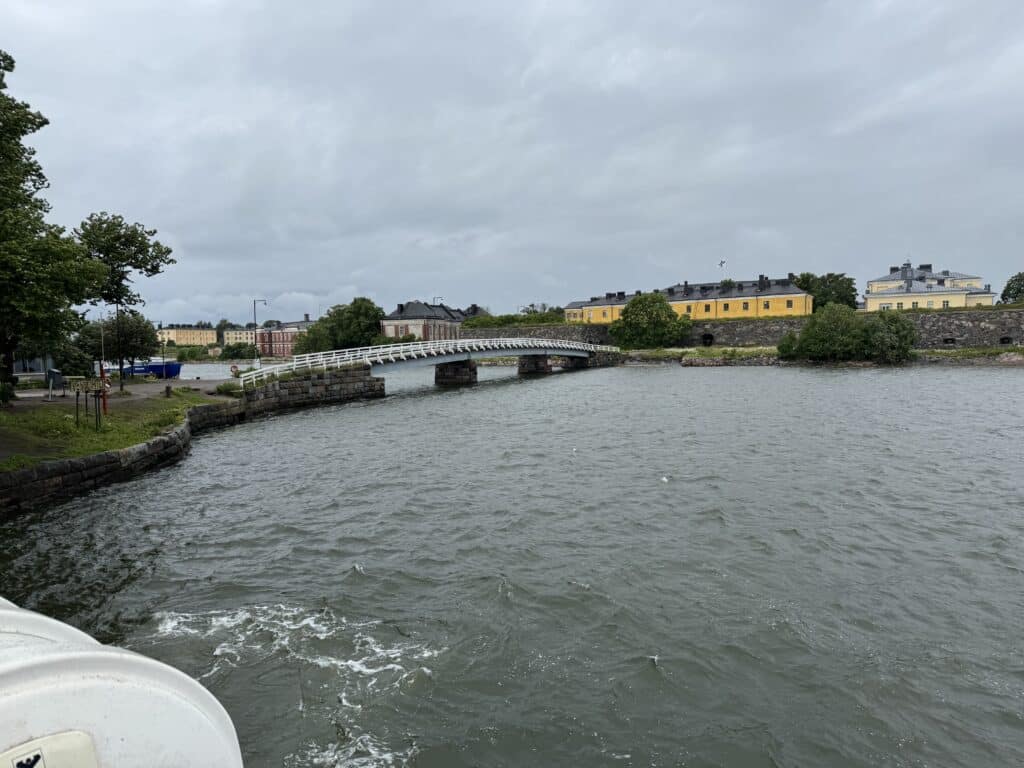
Getting off the ferry, there's a second bridge leading to another section of the island that we didn't cross that day.
Instead, we went straight into the visitor center - clean restrooms, warm, and spacious inside. This is also where we tried, and failed, to get set up with the island's walking app. I'd apparently chosen the wrong privacy setting when downloading it, and could never get it to load directions on my phone.
Without the interactive map, navigating the island got frustrating. The signage isn't great. The paper map handed out at the visitor center doesn't do a lot of the work for you either. If you're heading out here, it's worth downloading the app and checking your permissions before you leave the mainland - or just accepting that you'll be navigating partly by instinct.
Three Empires in One Walk
What makes Suomenlinna worth the slightly confusing walk is the layered history under your feet. The fortress was built starting in 1748 by Sweden to guard against Russian naval advances into the Gulf of Finland. It didn't hold. During the Finnish War in 1818, the fortress surrendered to Russian forces and Russia held it as a garrison for the next 110 years. When Finland declared independence in 1918, the fortress passed to the new Finnish government and it's been Finnish ever since. Ironically, in the years right after independence, Suomenlinna also briefly served as a prisoner-of-war camp during the Finnish Civil War.
Cannons, a Courtyard, and a Dry Dock
History shows up everywhere you look. The visitor center pointed us toward a lookout with sweeping views over the open Baltic. We found it and from there kept going, eventually stumbling onto the old coastal cannons and the tunnels dug into the fortifications.
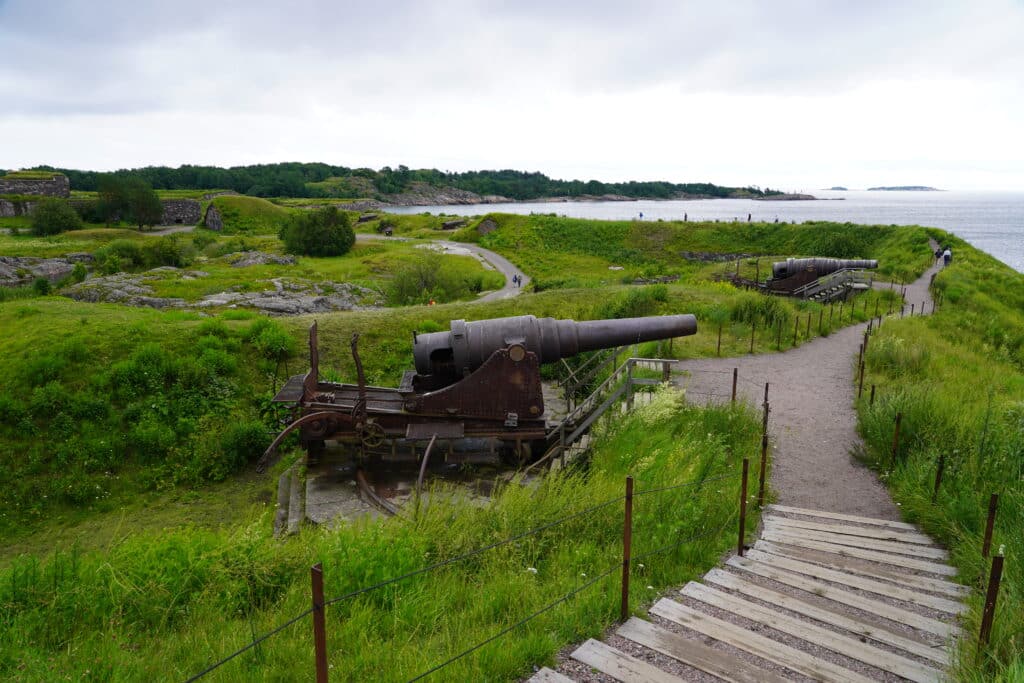
The cannons are scattered across several of the island's bastions, most still mounted on their original iron carriages and aimed out toward the sea lanes they were built to guard. These aren't decorative props - they're the actual reason Suomenlinna existed in the first place: a physical wall of artillery meant to stop an enemy fleet before it ever reached Helsinki's harbor. Standing next to one, it's easy to forget you're on what's now a quiet, grassy island with cafés and picnic spots - until you look down the barrel and realize exactly what it was pointed at, and why.
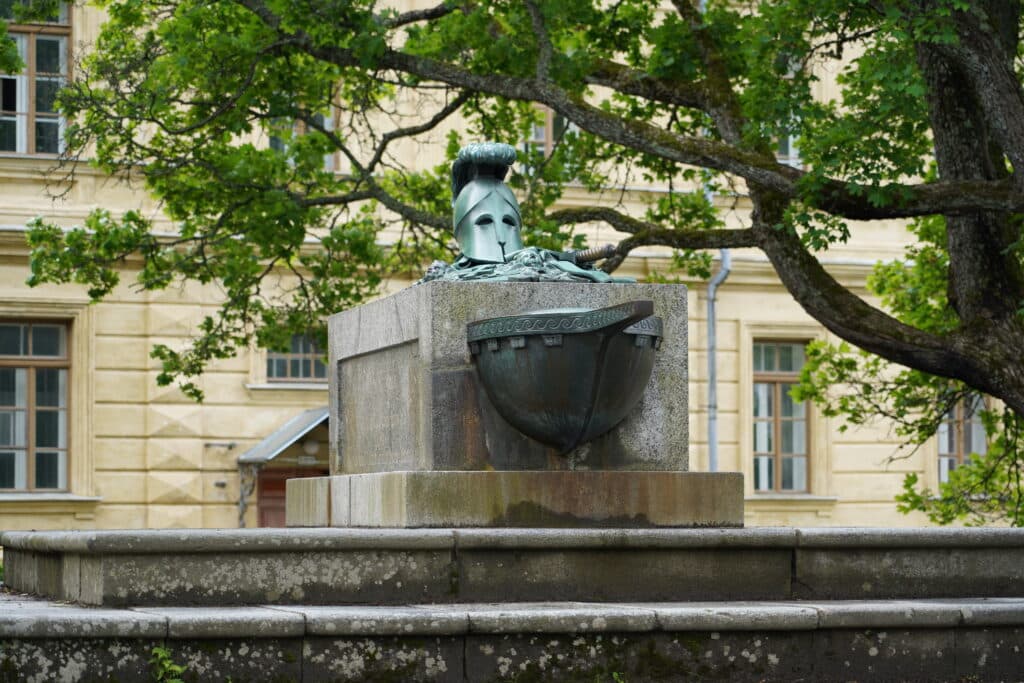
From there we found the Great Courtyard, the fortress's original main square, completed in the 1760s and badly damaged during the Crimean War in 1855.
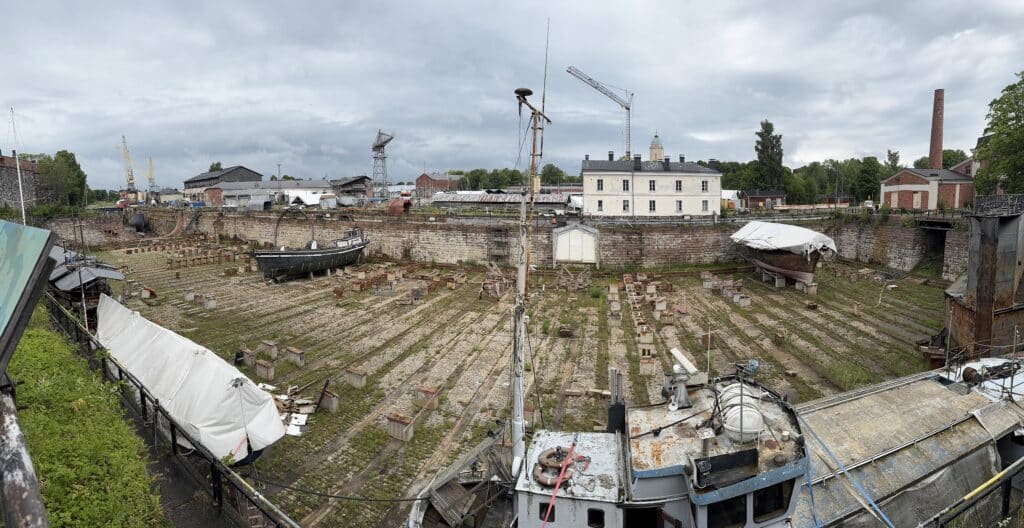
In a separate part of the island, we also came across the dry dock. It is one of the oldest operating dry docks in the world, dating to the 1760s. It was originally built to construct ships for the Swedish coastal fleet under naval architect F.H. af Chapman. It's still used today to maintain wooden sailboats. Standing at the edge looking down into the basin, it's a deep stone-walled pit built specifically to be flooded and drained on command, centuries before that kind of engineering was common.
The King's Gate and Russia's Uncomfortable Footnote
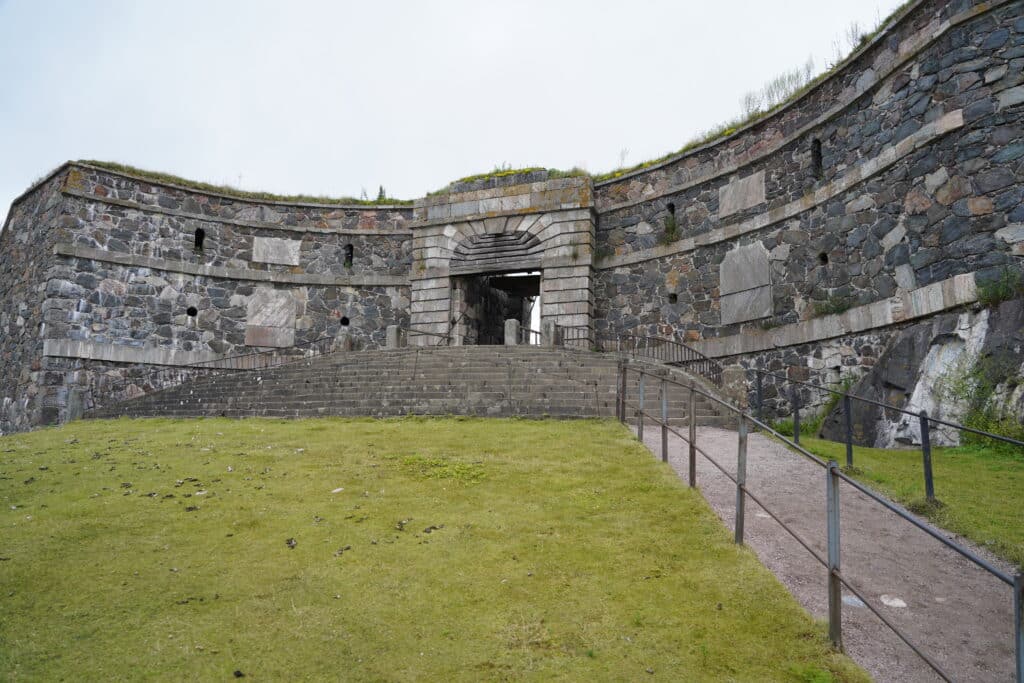
The walk ends at the King's Gate. It is the ceremonial entrance to the fortress built in 1753-54 out of sandstone and limestone shipped in from quarries near Stockholm. It marks the exact spot where King Adolf Frederick of Sweden anchored his ship to inspect the fortress under construction - though the fortress itself was never actually finished under Swedish rule. Russia occupied it in 1808 before the job was done, and to this day the completion year was simply never engraved into the gate alongside the 1748 start date.
The gate carries one more detail worth knowing: a plaque bearing Ehrensvärd's own words, roughly translated as "Progeny, stand here on your own foundation, and do not rely on foreign help." Given that the fortress surrendered to Russia within a few decades of being built - and stayed under Russian control for 110 years afterward - the quote reads less like a proud declaration today and more like a warning nobody quite managed to heed. The gate itself was later damaged during the 1855 Crimean War bombardment (Russia was defending the fortress by then, against a combined British and French fleet) and had to be restored in 1925, under the newly independent Finnish government.
It's the most photographed spot on the island for a reason: a grand stone archway facing straight out to open water, carrying three empires' worth of history in a single wall.
A Grave Marker That Stopped Us
Near the King's Gate, we came across something that shifted the whole tone of the walk: a grave marker inscribed with a list of names, dates, and the year 1937 - a memorial to the victims of the Vallisaari explosion.
On July 9, 1937, an ammunition depot on Vallisaari - Suomenlinna's neighboring island, sitting just 81 meters away across the narrow Kustaanmiekka strait - detonated without warning. Tonnes of stored explosives went off in what's still known locally as the "Valley of Death," and fragments were flung as far as Suomenlinna itself. Eight people were killed instantly; four more died later of their injuries in the hospital. The head of the Defence Ministry's armaments department, so shaken by what he'd witnessed, died of shock a week later. The cause was never determined - carelessness is the leading theory, though sabotage was never fully ruled out.
Standing at that stone, with the actual island where it happened visible just across the water, made the fortress feel less like a historical attraction and more like a place where real, specific people had died - some of them, judging by the dates carved into the granite, barely into adulthood.
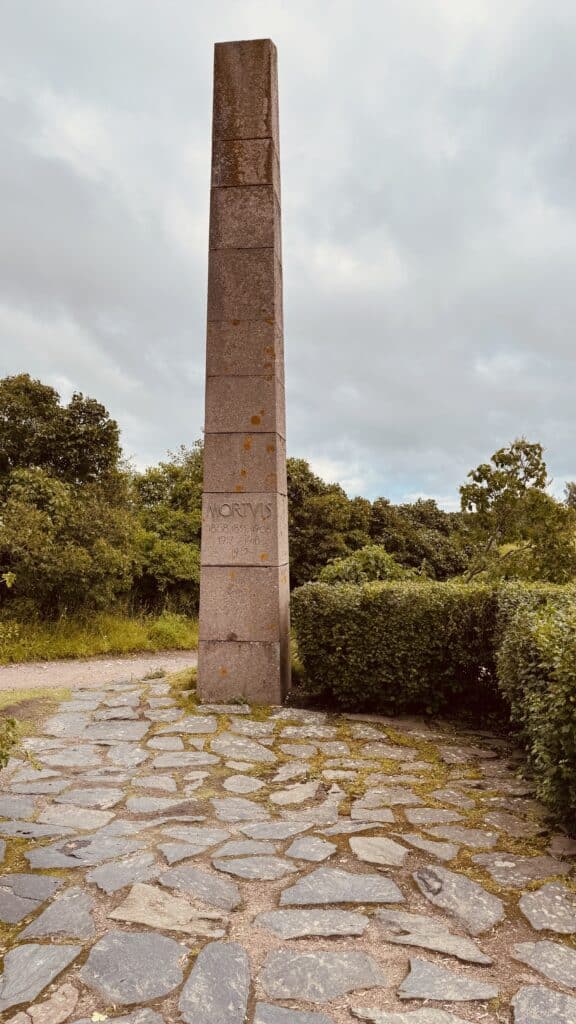
A short distance away stands a second, related monument: a tall granite obelisk called "Mortuis" - Latin for "for the dead." Designed by architect Elsi Borg and erected in 1951 at the burial site of the Vallisaari victims, it's engraved with six years rather than names: 1808, 1855, 1906, 1917, 1918, and 1937. Each marks a different disaster or turning point in the fortress's history - the 1808 surrender to Russia, the 1855 Crimean War bombardment, the 1906 Viapori mutiny, Finland's 1917 independence, the 1918 civil war, and finally the 1937 explosion. Six dates, one obelisk, two centuries of the same small island absorbing one disaster after another.
We couldn't cross to Vallisaari itself that day - it runs on a separate ferry system, not covered by the HSL day pass we were using - but looking across that narrow strait from the King's Gate, knowing what had happened over there, was enough.
The Church That's Also a Lighthouse
One detail easy to miss: Suomenlinna's white church, the one that comes into view from the ferry, was originally built in 1854 as a Russian Orthodox garrison church. After Finland's independence it was converted to Lutheran and remodeled in a neoclassical style - but it kept one unusual feature. The steeple doubles as a working lighthouse, still guiding both sea and air traffic today, flashing a beacon pattern that spells "H" for Helsinki in Morse code.
The Ride Back - and a Bonus We Didn't Plan
We didn't wait long for the return ferry, maybe ten minutes, and the trip back was just as memorable as the ride out - more islands, more bridges, boats passing in every direction. Coming into Helsinki's harbor, the skyline opens up all at once: the Ferris wheel, the cathedral, the Palace Hotel, all visible at the same time from the water.
We got back to the hotel around 4pm and lay down for what was supposed to be a short nap. It turned into a three-hour one - by the time we woke up around 7pm, a lot of places had already closed for the evening, so we grabbed food and decided to make use of the rest of our day pass with one more trip to the island.
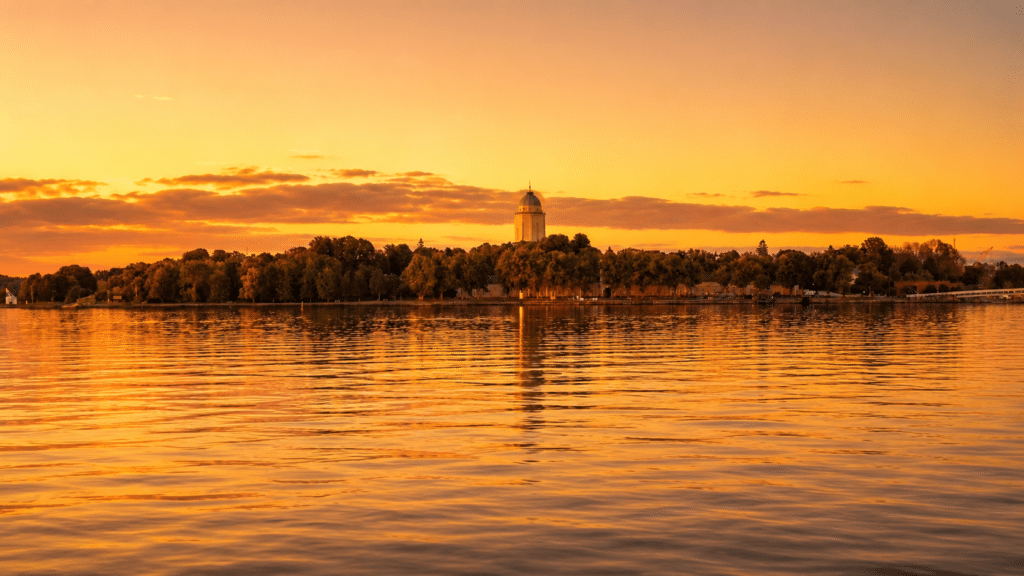
At 10:20pm, with the sun starting to go down, we caught the ferry out again - this time purely for the golden hour. Since the next return wasn't for another hour, we just stayed on board and rode straight back to Helsinki. Fifteen minutes out, fifteen minutes back, and essentially free, since it was covered by the same day pass. It turned out to be some of the best light of the entire trip - the bridge, the islands, the water, and the fortress church all lit up gold. We got back to Helsinki by 11pm and grabbed a late dinner.
One thing worth knowing: the yellow market tents at Kauppatori close up fairly early in the evening, but that's not the end of food in the area. Food trucks roll in around 9 or 10pm right after the tents shut down, so there's genuinely always something to eat in the Market Square area, even at 11pm on a ferry night. We walked around a little after eating, then went back to the hotel and called it a night around midnight.
Know Before You Go
- Ferry cost: €3.30 one-way on a single AB ticket, or covered entirely by a €9 Helsinki day ticket if you're planning multiple trips or combining it with other public transport that day.
- Ride time: under 15 minutes each way.
- Download the app before you leave the mainland - and double-check your phone's privacy/location permissions before you go, or you may end up navigating by paper map and guesswork like we did.
- The golden-hour ferry ride is free content if you're already on a day pass - worth doing even if you've already seen the island once that day.
- Late-night food is available at Kauppatori even after the market tents close - food trucks take over around 9-10pm.
- Vallisaari is a separate ticket and a separate island - if the wartime history interests you, budget a second trip specifically for it, since Suomenlinna's pass doesn't cover it.
- Don't skip the second bridge near the main quay if you have time; we didn't cross it and would like to go back and see what's on the other side.
Additional Information
\The standard HSL municipal ferry runs year-round from Helsinki's Market Square (Kauppatori) to the main pier (Jetty Barracks). It is fully integrated into the HSL transit network (Zone AB ticket covers it).
Seasonal private water buses run directly to Tykistölahti pier near the central visitor center.
Walking & Ground
Following the main marked Blue Route (~1.5 km / 1 mile) covers the primary historical points from north to south.Paths consist of uneven cobblestones, gravel tracks, and exposed granite slopes. Wear sturdy walking shoes and bring wind-proof layers, as exposure on the sea bastions is significantly higher than on the mainland.
Lastly, for travelers entering the fortress grounds, it is completely free. Tickets are only needed for specific indoor venues (like the Suomenlinna Museum or Ehrensvärd Museum).
Related Content:
Explore and Discover




The Travel Tipster
I'm Ed Vasquez — The Travel Tipster. I've explored 35 countries and 100+ cities, almost always in a business class seat earned entirely through points. Firsthand destination guides, honest reviews, and practical points advice — from someone who has actually been there.