
Tallinn Day Trip from Helsinki
Tallinn day trip from Helsinki includes Medieval spires, a Soviet-era prison, and a duty-free booze run
Some day trips give you a change of scenery. This Tallinn day trip from Helsinki gives you a change of country. Tallinn sits just across the Gulf of Finland from Helsinki, close enough that you can leave after breakfast and be back in Finland in time for a late night dinner.
Choosing a Ferry
There are three main options for the crossing, and all of them will also carry a car if you want one: Eckerö Line, Tallink, and Viking Line. We compared schedules and price before booking.
Eckerö Line - the one we chose. Departed Helsinki West Terminal at 9:00 AM, arrived Tallinn at 11:15 AM. Return departed Tallinn at 6:30 PM, back into Helsinki West Terminal by 9:00 PM. Price: €36 per person, though it climbed the later in the day you looked.
Tallink - earlier options, around 7:30 AM or 10:30 AM.
Viking Line - later start, around 10:30 or 11:30 AM, priced around €39.
Eckerö landed right in the middle of the pack on timing, which was exactly the point - early enough to get a full day in Tallinn, late enough that we didn't have to be up at dawn or stumbling back into Helsinki near midnight. An Uber from the hotel to Helsinki West Terminal ran about $10, and with it being a Saturday morning, traffic was a non-issue.
Worth knowing if you want more than a day trip: several of these lines run all day crossings too, using it to turn Tallinn into an overnight, two-day visit instead of a single-day sprint. Either version works; we just didn't have the extra day to spare on this trip nor did we realize that it was worth spending two days or more here.
The Empty Luggage Carts

One small mystery solved itself by the end of the day. Boarding that morning, we noticed several passengers wheeling around completely empty luggage carts - which seemed odd until the return trip, when those same carts came back stacked with cases of cider and beer. This turns out to be a genuine local institution rather than a fluke: alcohol taxes are meaningfully lower in Estonia than in Finland, so a same-day ferry run specifically to stock up on cheap booze is a well-worn Helsinki tradition, not a tourist quirk.
Spotting Old Town
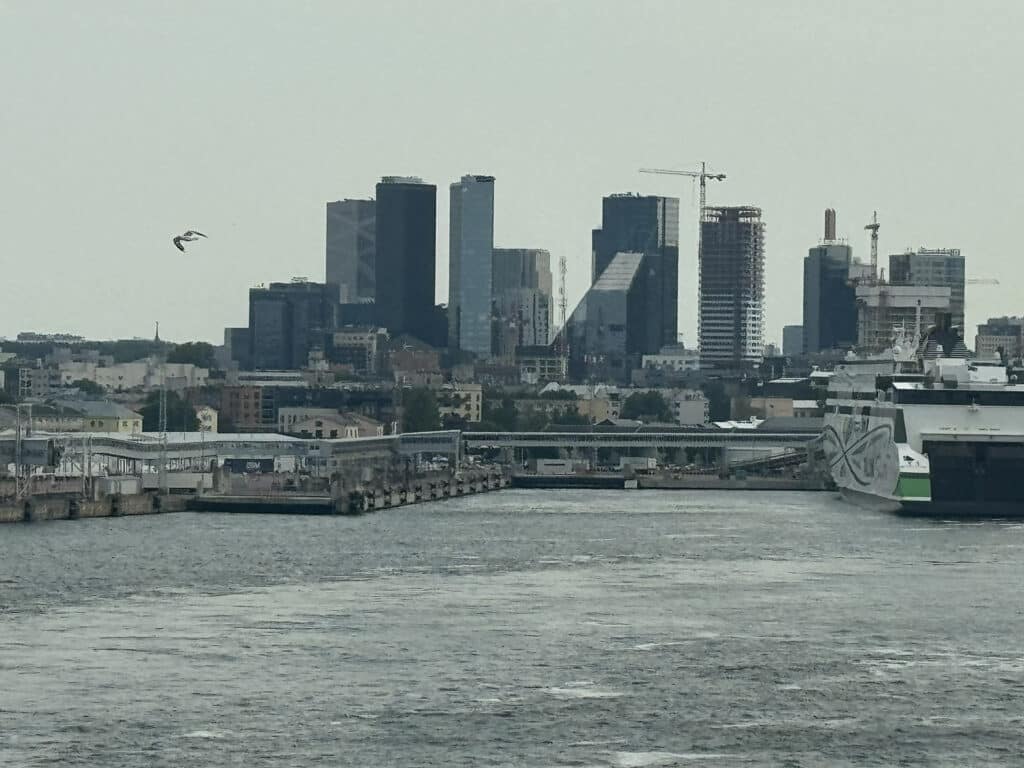
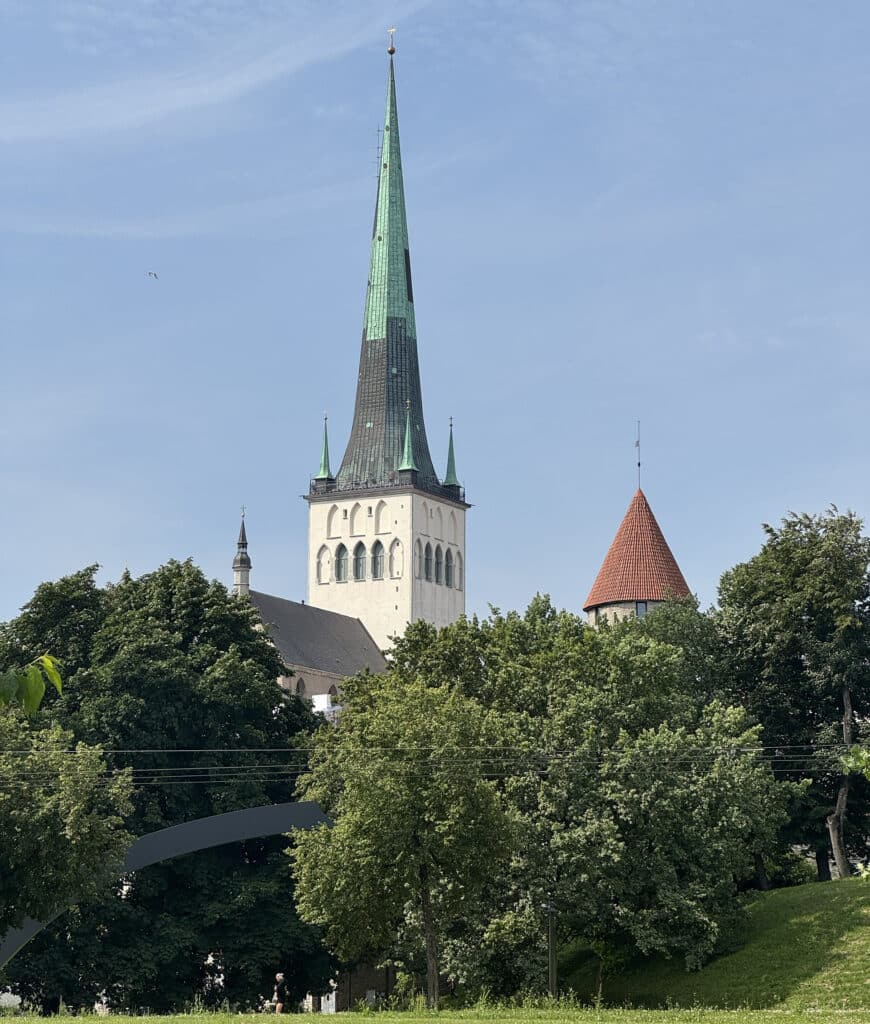
Once the ferry docks, finding Old Town takes no effort at all - mostly because you can see it before you're even off the pier. A single spire rises noticeably higher than everything around it, poking above the medieval fortress walls: that's St. Olaf's Church. St. Olaf's spire was actually built deliberately tall - by some historical accounts, it was the tallest building in the world from 1549 to 1625, at roughly 159 meters, engineered specifically so ships far out in the Baltic could spot Tallinn from the water. That height came at a cost: the tower's been struck by lightning around a dozen times and burned to the ground on three separate occasions.
Past that, the strategy for finding the gates is simple: just follow the crowd. Everyone disembarking the ferry is headed the same direction.
Stepping Back Several Centuries
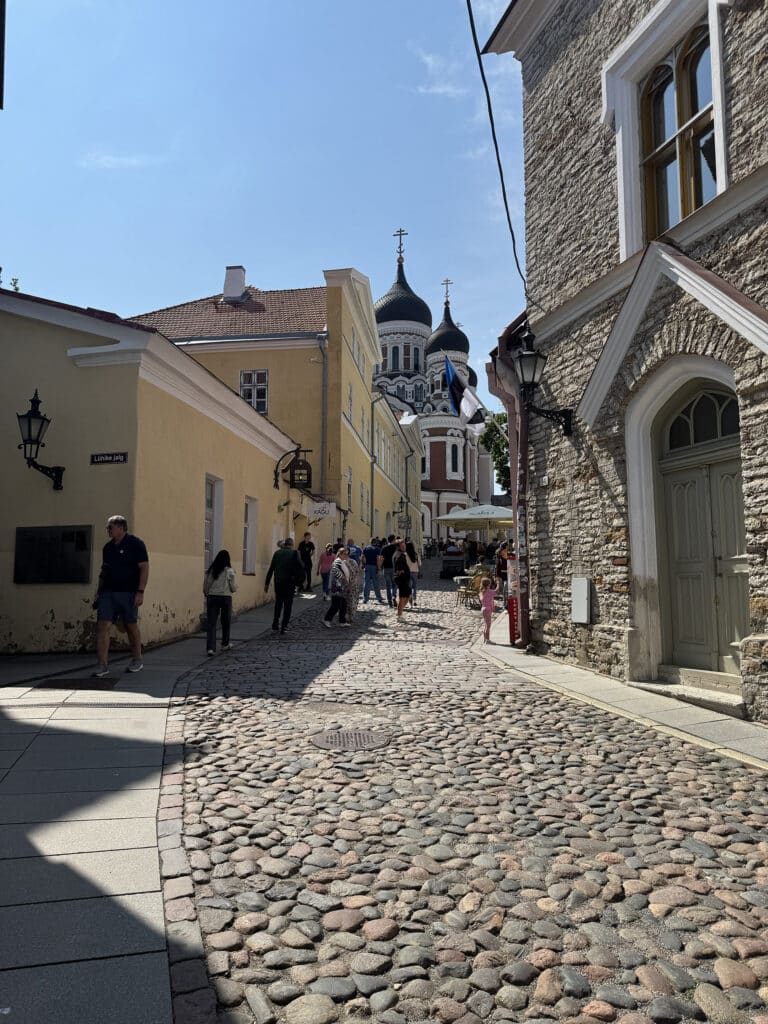
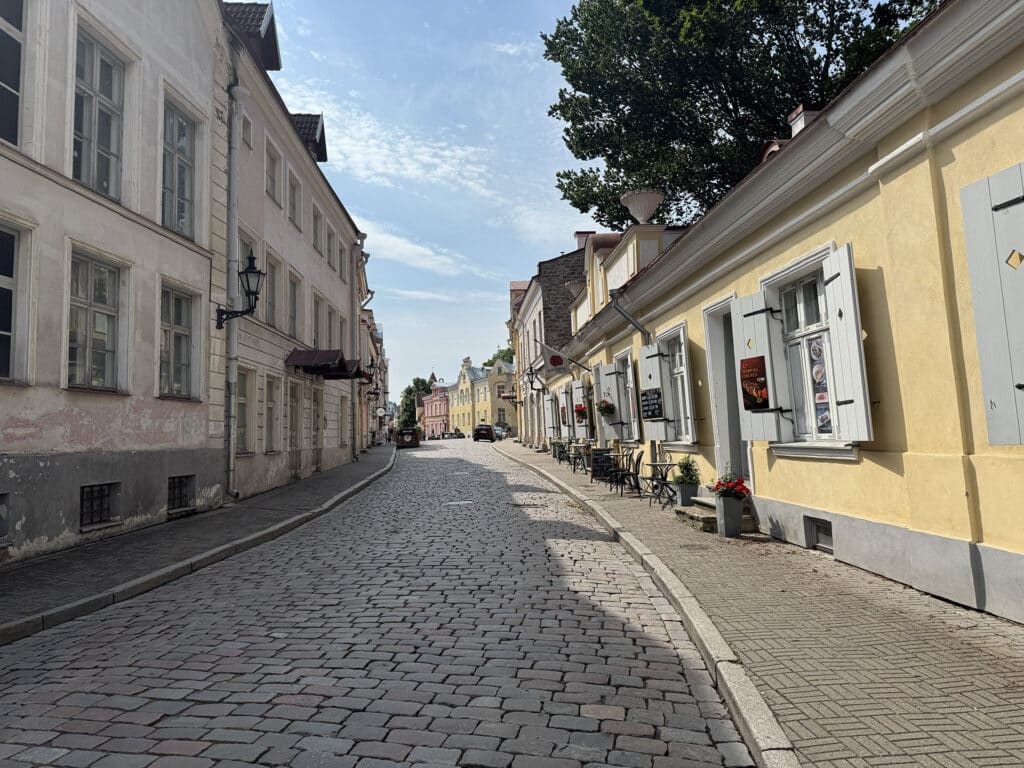
Walk through the gates and the transition is immediate - cobblestones underfoot, tall pastel-colored merchant houses leaning in on both sides, and virtually no visual concession to the 21st century. Tallinn's Old Town is one of the best-preserved medieval town cores left in Europe, and it doesn't take more than a couple of minutes of walking before you reach the base of the church you just spotted from the water.
A Tiny Chapel in the Green Market
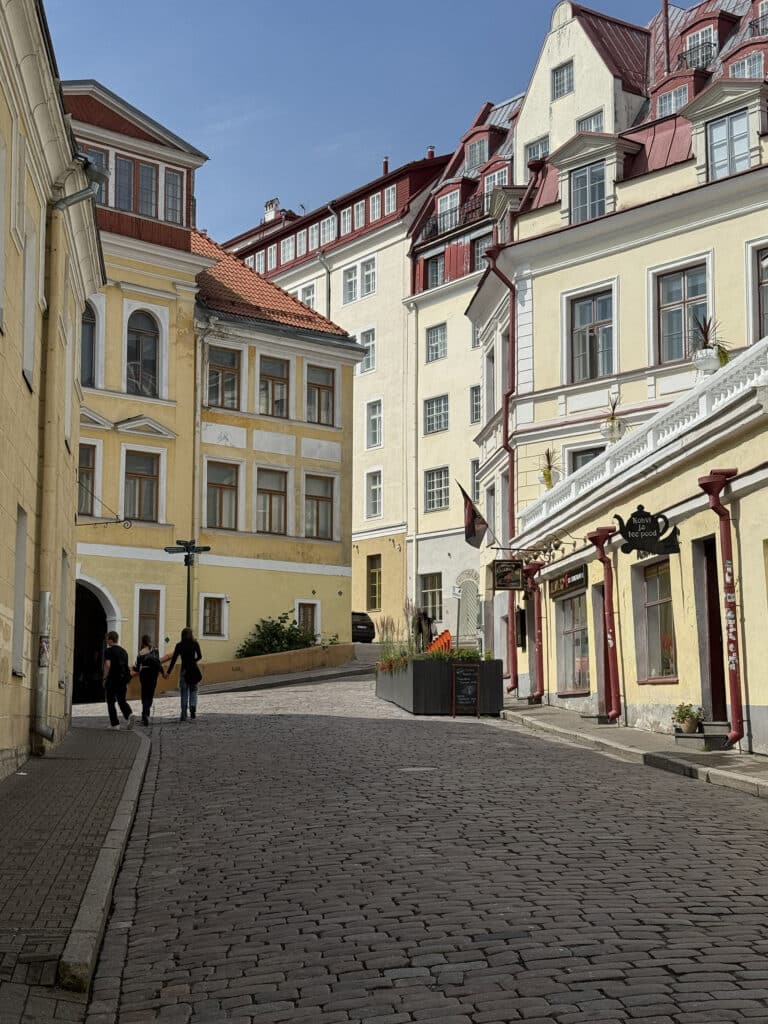
Tucked into a small park called Roheline Turg ("Green Market"), we came across a small Russian Orthodox chapel easy to miss if you're not looking for it. The little park it sits in has genuinely shifted purpose more than once: it operated as a fish, vegetable, and flower market through the 19th century before the market was shut down in 1893 and the space was turned into greenery instead. The chapel itself came a bit later, completed in 1909 to mark the 15th anniversary of Tsar Nicholas II's reign - a small but distinctly Russian imperial footprint tucked into an otherwise Hanseatic Old Town, not unlike the much larger Alexander Nevsky Cathedral up on Toompea.
St. Olaf's, and the KGB Right Across the Street
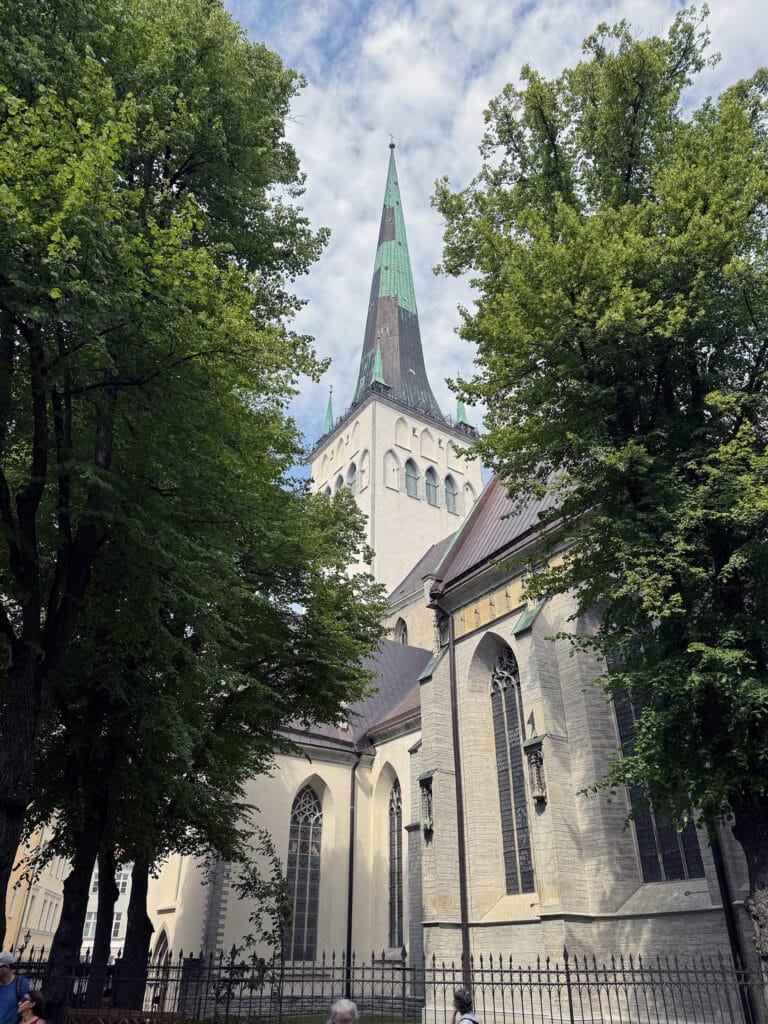
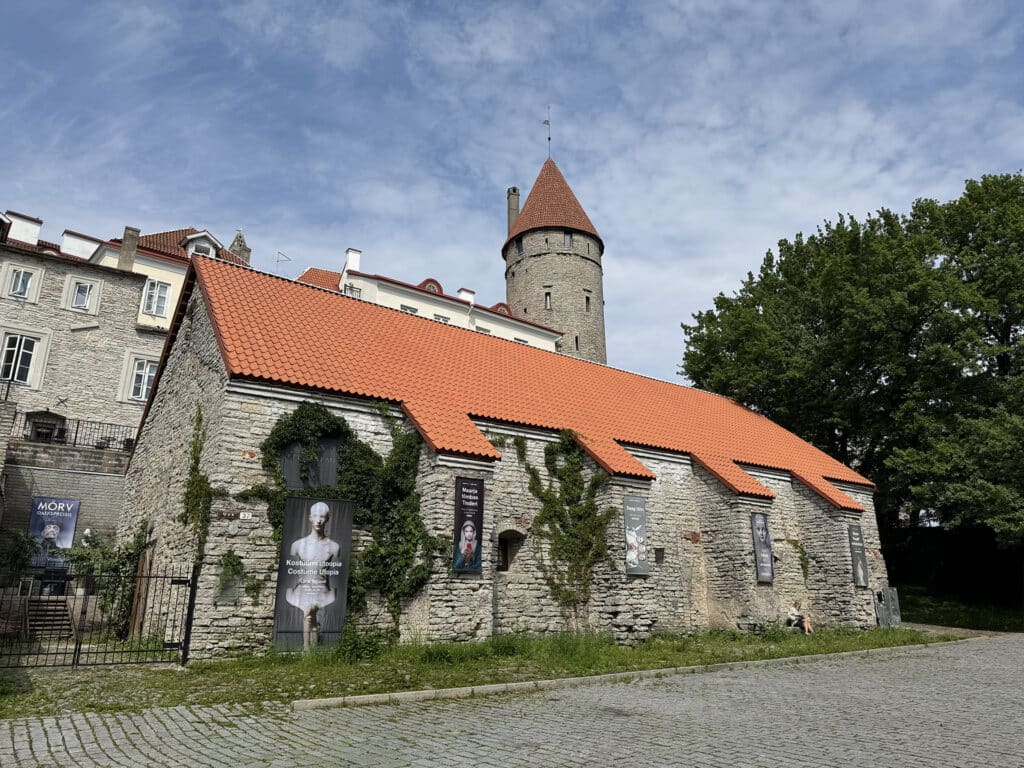
Up close, St. Olaf's is worth the short detour - a genuinely massive Gothic hall church for a town this size, with the green copper spire visible for miles.
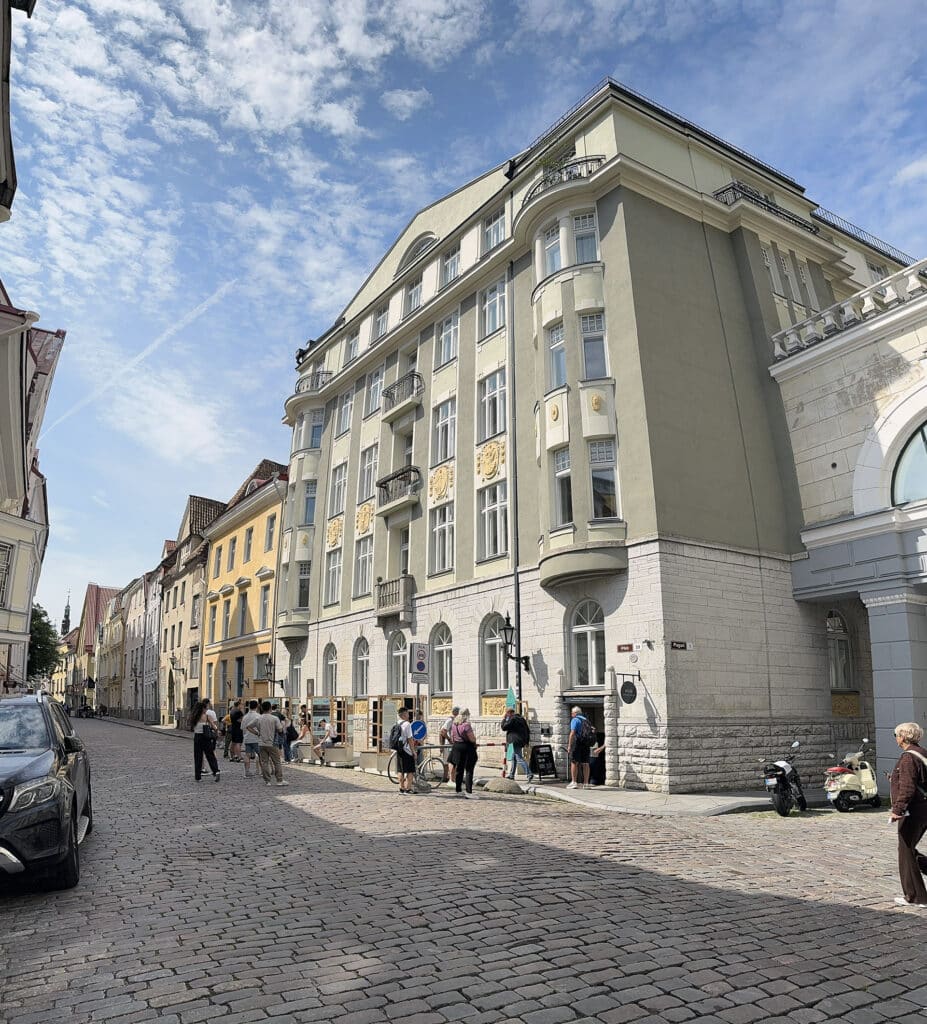
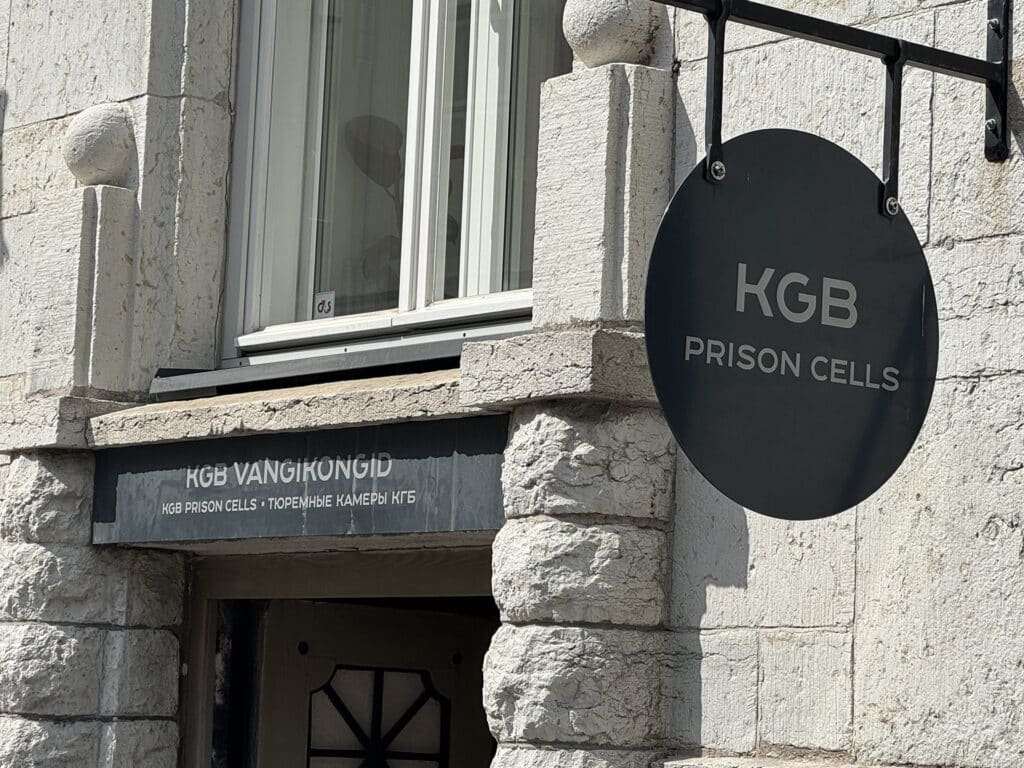
Directly across the street sits a building with a much heavier story: the KGB Prison Cells, at Pagari 1. From the outside it's an elegant Art Nouveau apartment building - which is exactly what it originally was, before it became the KGB's Estonian headquarters and pre-trial detention center for nearly half a century of Soviet occupation.
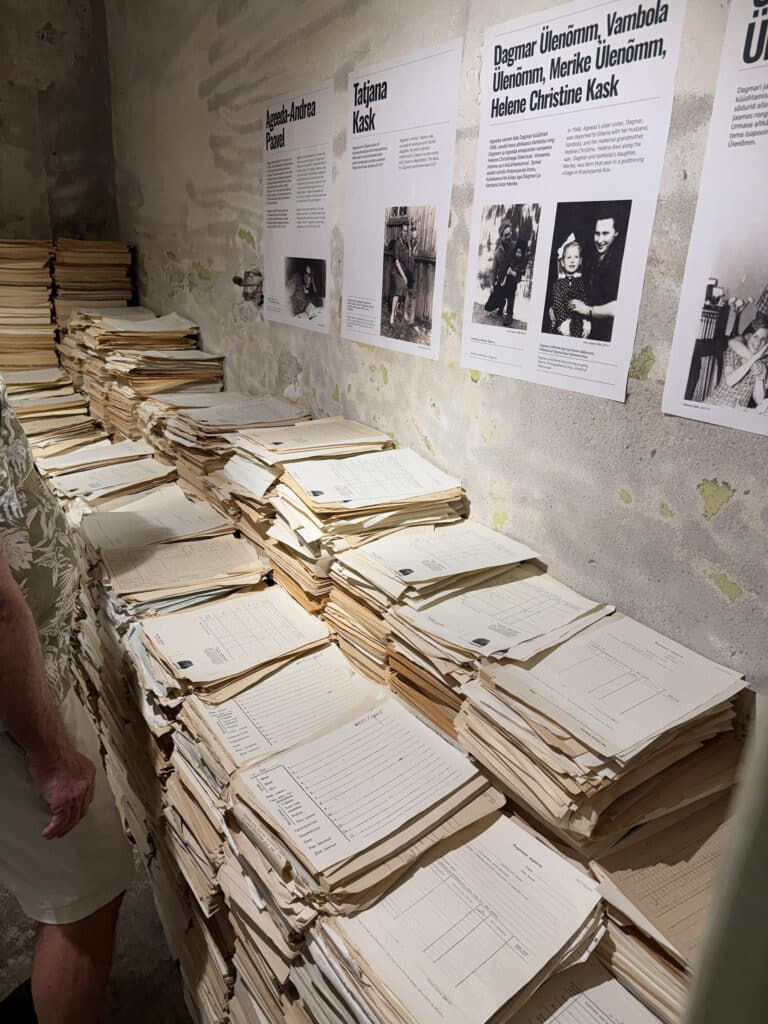
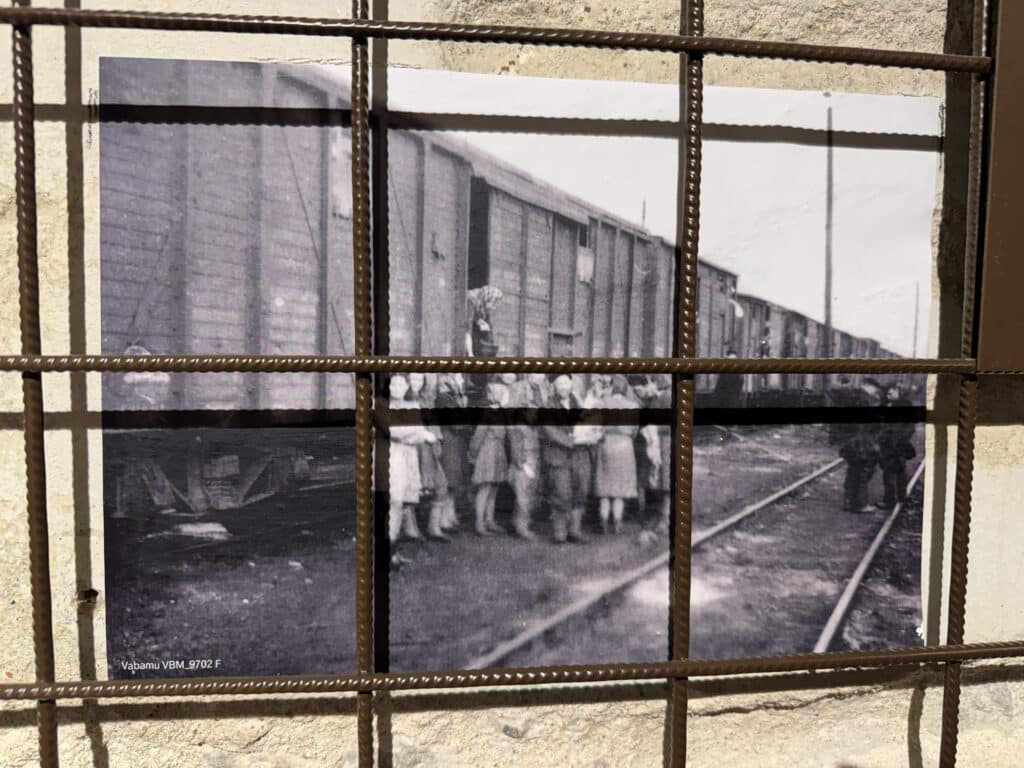
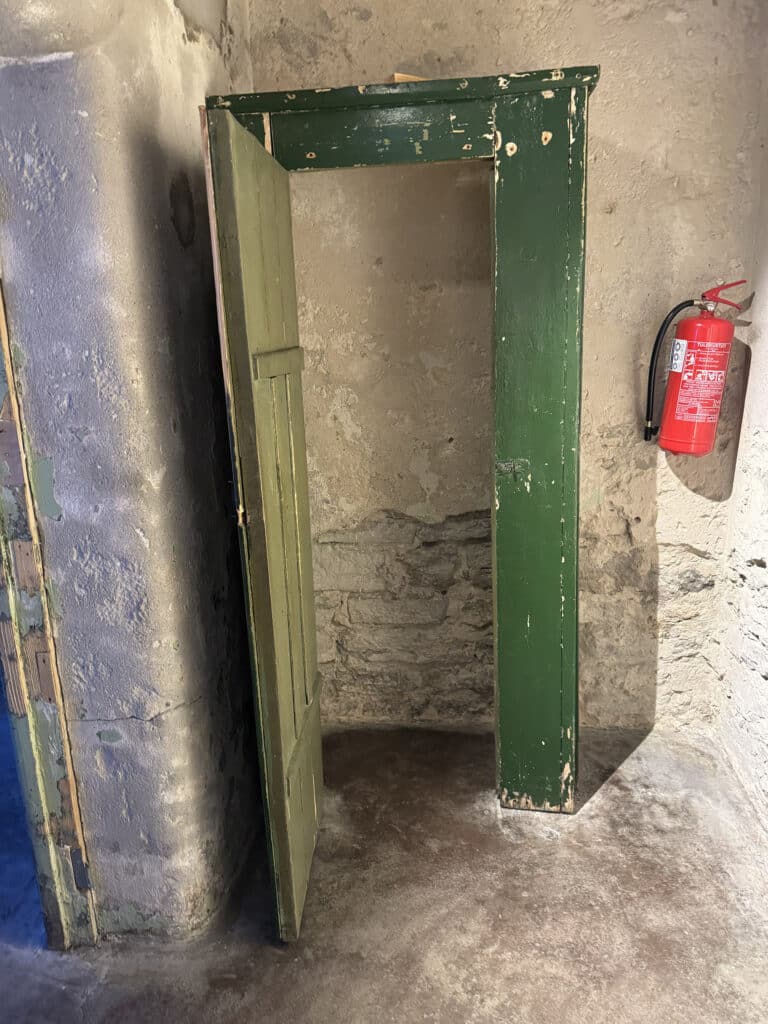
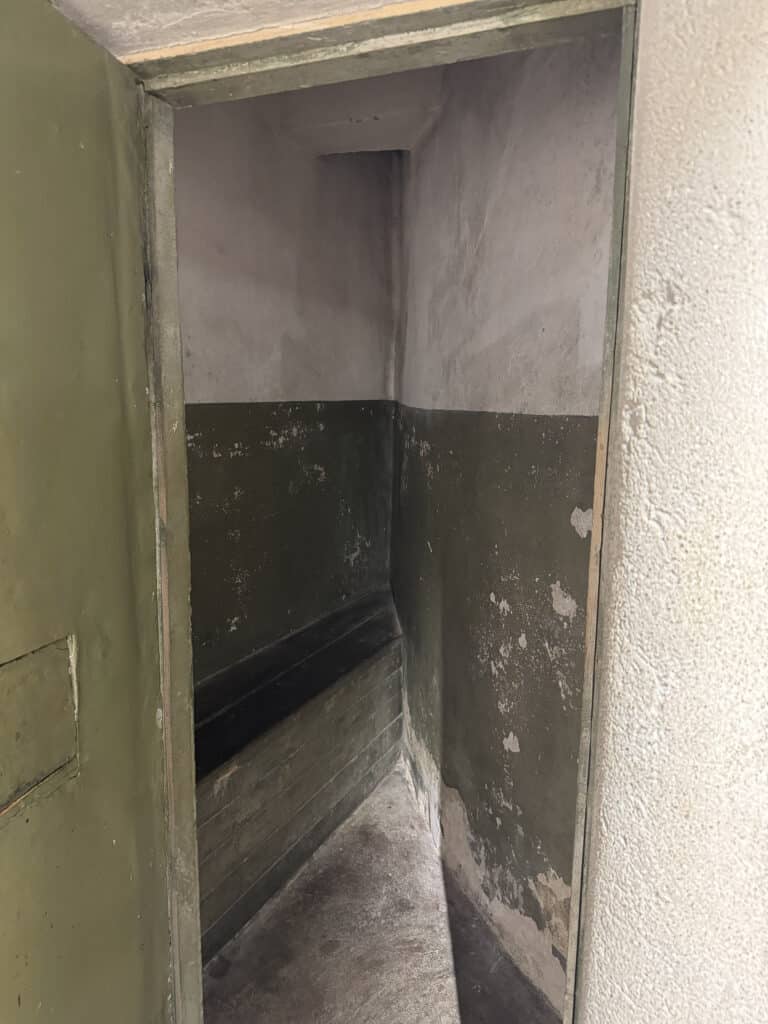
Inside, the basement holds six original cells and one solitary confinement cell, left largely unrestored - no dramatization needed. Stacks of real deportation paperwork line one corridor alongside photo panels naming specific people: politicians, war veterans, intellectuals, and ordinary citizens who were interrogated, tortured, and in many cases deported to Siberia in cattle cars during the mass deportations of the 1940s. It's a genuinely sobering stop, and a useful counterweight to how easy it is to only photograph the pretty parts of a place like this. Admission ran $18.34 for the two of us.
Maiasmokk, and an Afternoon Reset
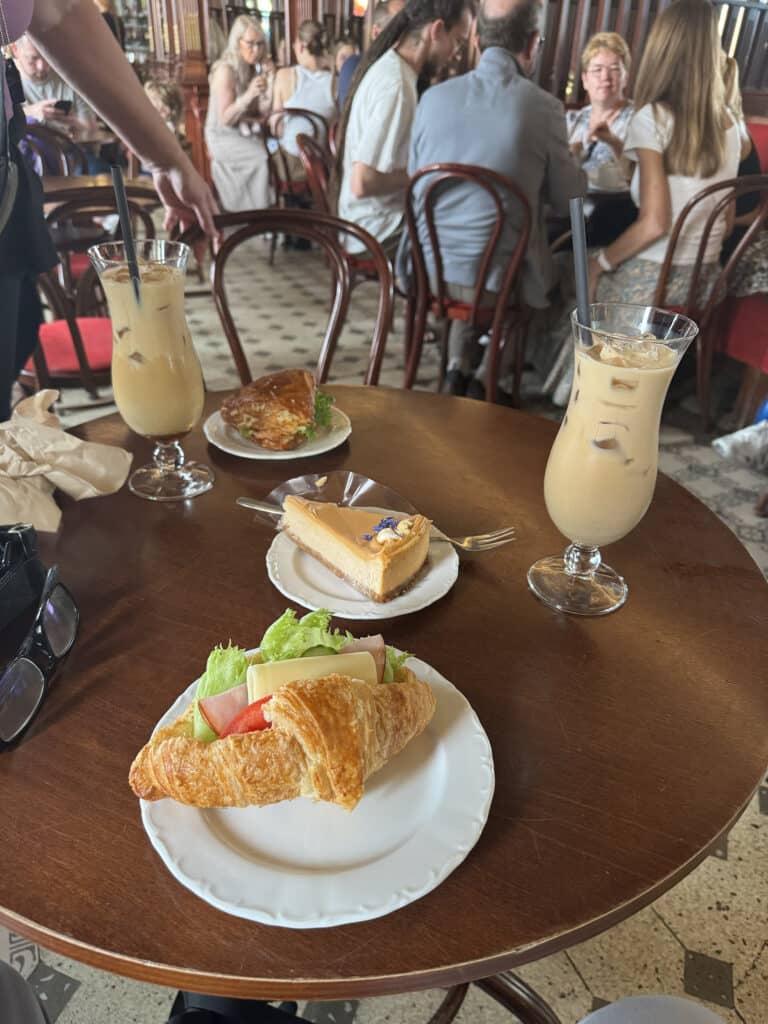
Once we'd finished at the prison, we kept walking until we ran into Maiasmokk - Tallinn's oldest café, in continuous operation since 1864, sitting directly across from the Holy Spirit Church. We stopped for a croissant sandwich, a slice of cheesecake, and two iced coffees, for about $32 combined - money well spent for the sit-down after a heavy museum visit.
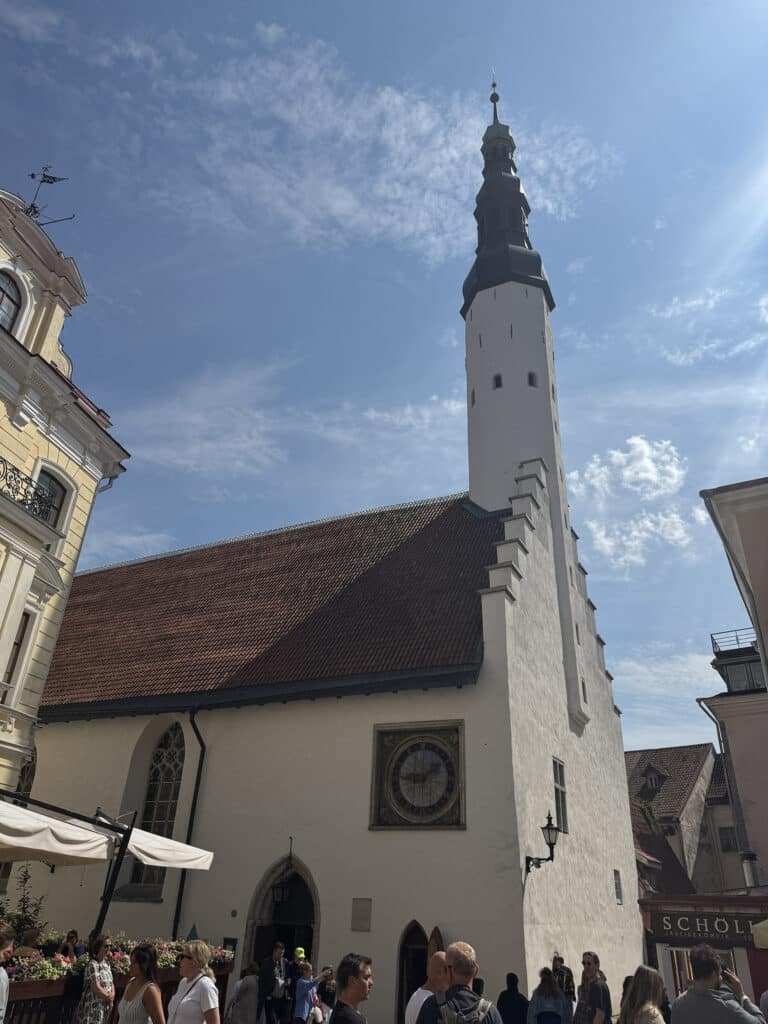
Right outside is the Church of the Holy Spirit, easy to spot thanks to the ornate clock mounted on its facade. That clock dates to 1684, carved by master woodworker Christian Ackermann, and it's the oldest public clock in Tallinn - still keeping time over three centuries later.
Raekoja Plats - Town Hall Square
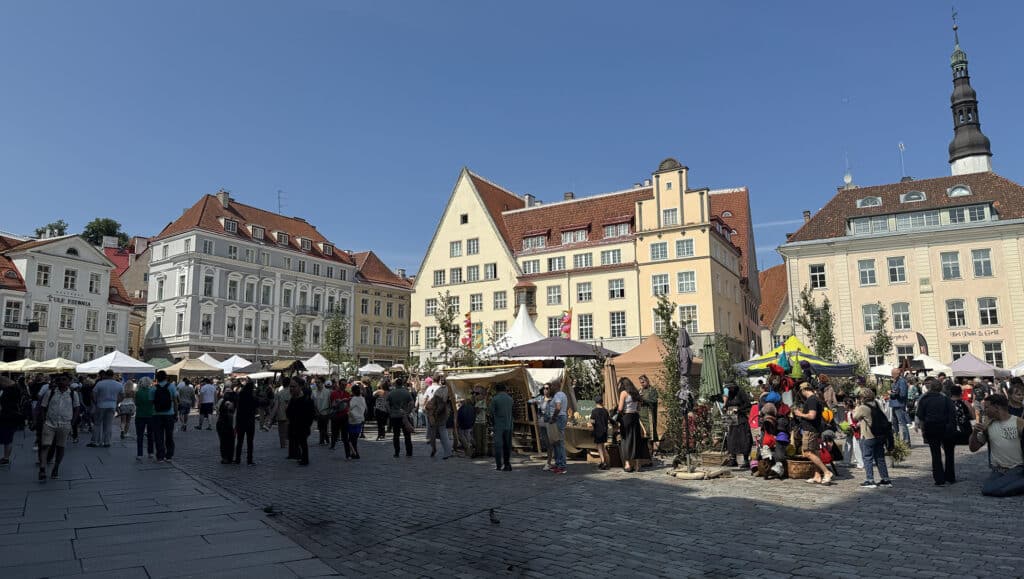
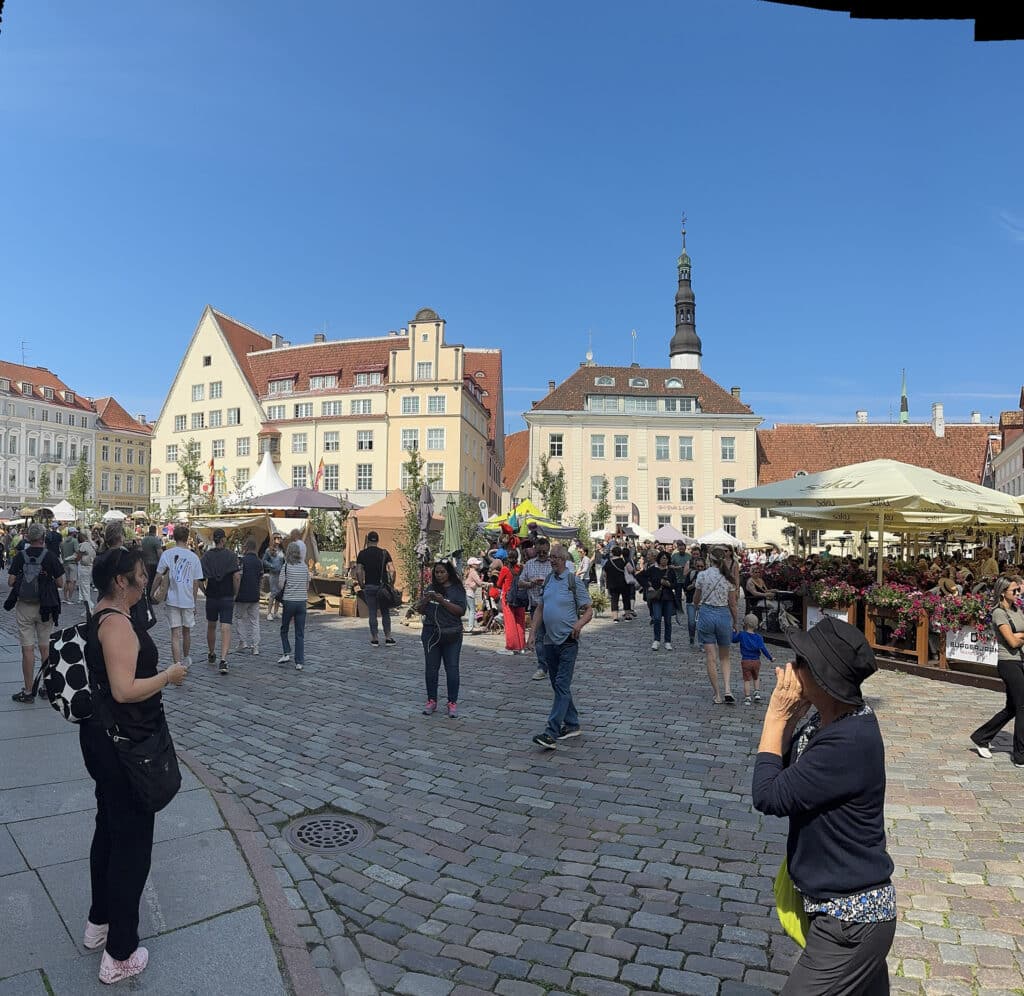
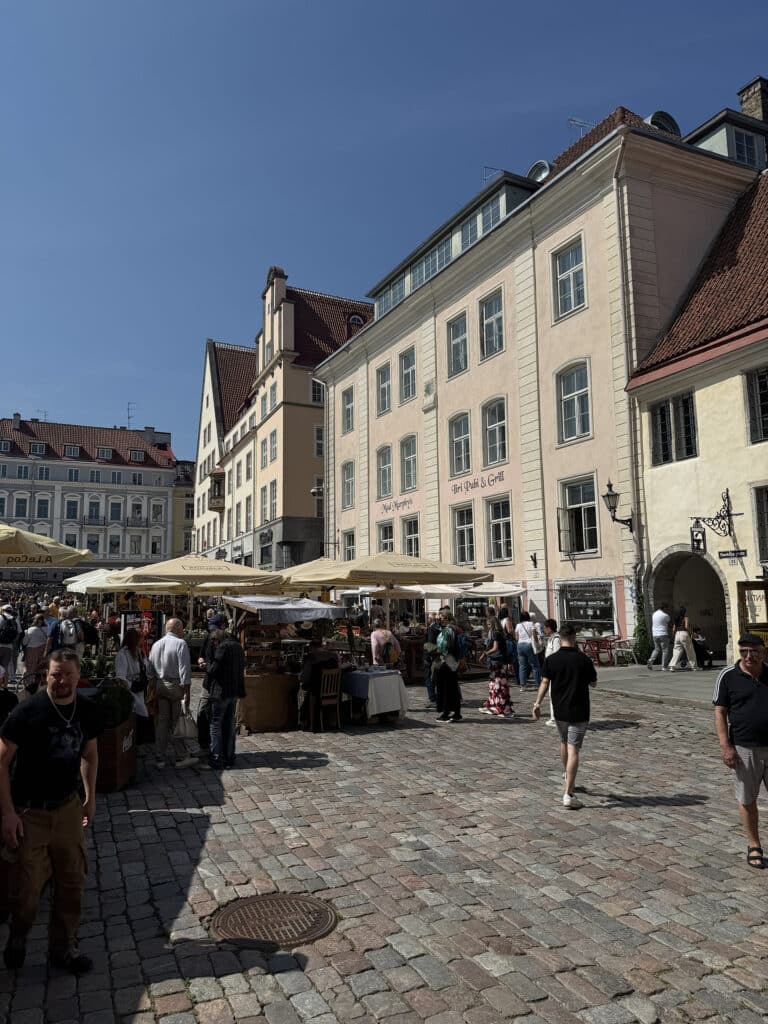
Just around the corner from Maiasmokk and the Holy Spirit Church sits Raekoja plats - Tallinn's actual Town Hall Square, and the civic heart of the city since the 13th century. Market stalls, café umbrellas, and a steady crowd fill the square most days; historically this same spot has hosted markets, public announcements, and - less pleasantly - public executions. The square is anchored by the Tallinn Town Hall itself, the Gothic building with the tall, slender spire that's visible from most of the surrounding lanes - it's the only surviving Gothic town hall left in Northern Europe. The square is ringed by pubs and restaurants like Mad Murphy's, making it a natural place to loop back through more than once in a day.
Just off the square, at Raekoja plats 11, sits the Town Hall Pharmacy (Raeapteek).
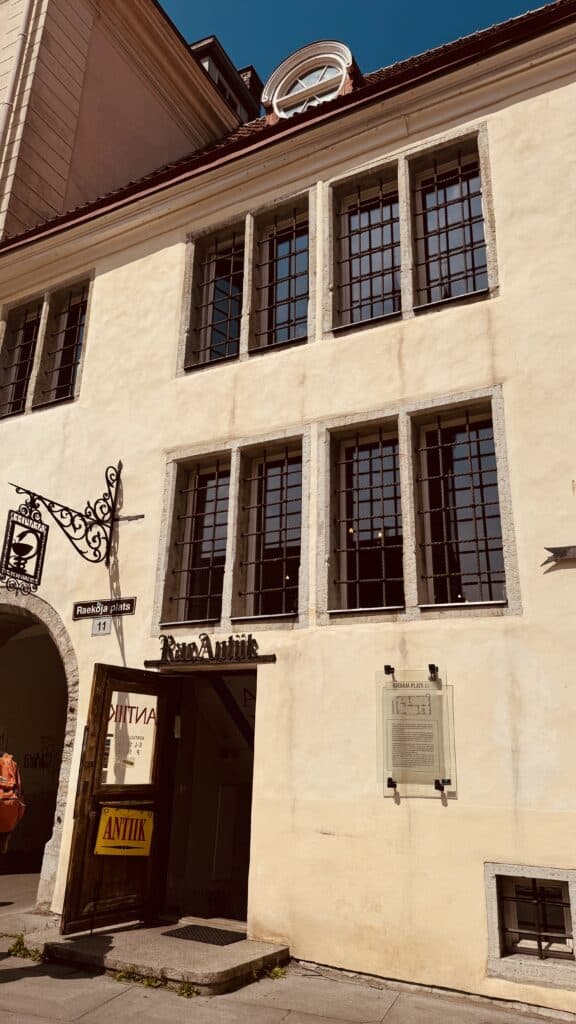
It's marked by a distinctive black wrought-iron hanging sign, and it's a genuinely remarkable spot to have walked past almost casually: the Raeapteek is the oldest pharmacy in Europe to have operated continuously in the same building, first mentioned in town records in 1422 (some scholars push the actual opening back to 1415). For over 300 years - ten straight generations, from 1582 to 1911 - it was run by a single family, the Burcharts. In medieval times, it doubled as something like a café and gathering spot for town aldermen, who'd stop in for a cup of claret (spiced wine, still sold there today) between selling more unusual remedies like powdered unicorn horn and earthworm oil. Part of the space still functions as a working pharmacy and museum side by side.
A Sit-Down at Kehrwieder
Just a few meters off the square, we ducked into Kohvik Kehrwieder for a second stop of the day. Unlike a standard café setup, Kehrwieder is known specifically for its oversized, overstuffed armchairs and sofas - genuinely comfortable seating rather than the usual small café chair, which made it an easy call for a proper sit-down and back-rest partway through a day of cobblestones. Cost was minor - about $10 - but the payoff in comfort was well worth the stop, especially for anyone who needs a real break from walking rather than just a change of scenery.
Into Toompea
Continuing on, the streets opened into more of Old Town proper and eventually up toward Toompea, the fortified hill that's been the seat of power in Tallinn since Danish crusaders built a castle here in the 13th century. The climb up is short but the distinction matters: Tallinn's Old Town has always been split into two very different halves. Down below is the Lower Town, where merchants, craftsmen, and guild members lived and worked - the streets we'd just been walking through. Up on Toompea is the Upper Town, historically reserved for bishops, Baltic German nobility, and the ruling class, entirely separate from the commercial city beneath it. The two halves weren't just socially distinct - they were legally and administratively separate towns for centuries, each with its own governance, and the hill itself was walled off from the Lower Town below. That divide hasn't fully gone away either: Toompea is still where power sits in Tallinn today, since Toompea Castle now houses the Estonian parliament, the Riigikogu.
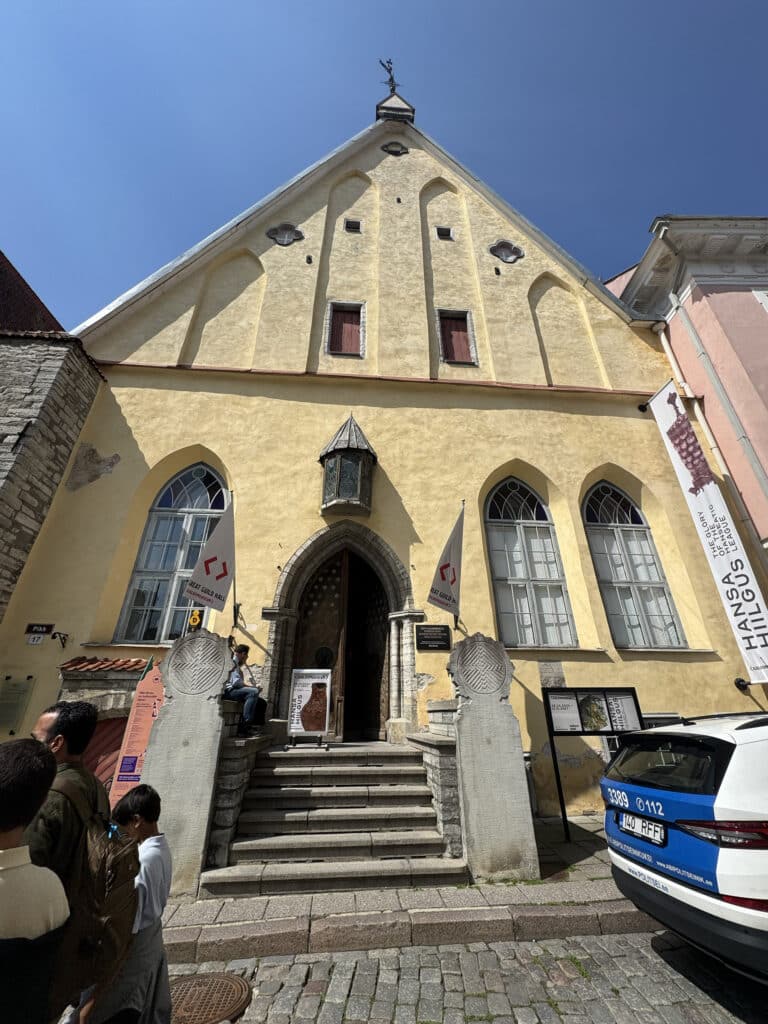
Along the way up we passed the Great Guild Hall, a Gothic yellow building that once housed Tallinn's most powerful Hanseatic merchant guild and now holds the Estonian History Museum - fittingly, one of the last landmarks of the merchant Lower Town before the climb into the aristocrats' hill above it.
A little further along Pikk, at number 20, stands a second guild building worth pointing out: the Kanuti Guild Hall.
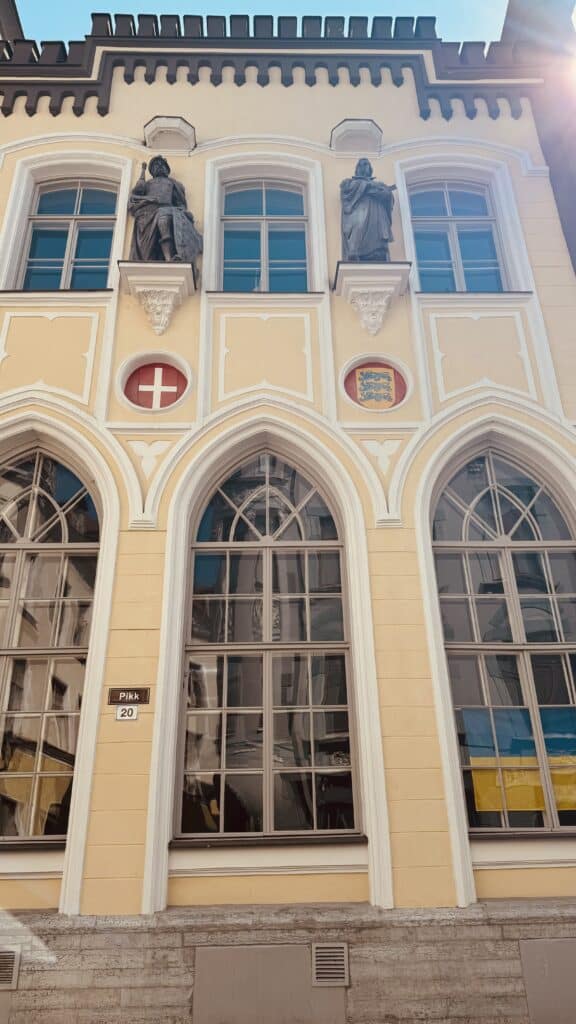
Where the Great Guild represented Tallinn's wealthiest merchants, the Kanuti Guild was historically home to the city's skilled craftsmen instead. The current facade - an English Tudor-revival makeover - only dates to 1863-64, even though the building underneath is much older, and it's decorated with carved statues of St. Canute (the guild's namesake) and, somewhat unexpectedly, Martin Luther. Two small roundels sit below them: a red-and-white Danish cross, tied back to Tallinn's original 13th-century conquest by Denmark, and the Estonian three lions. These days the hall has a very different life as a modern dance theater. One bit of local legend attached to the block: a carved figure of a spectacled man on a nearby building is nicknamed "the Peeping Man," supposedly placed there by a jealous husband to keep an eye on his wife while she danced inside.
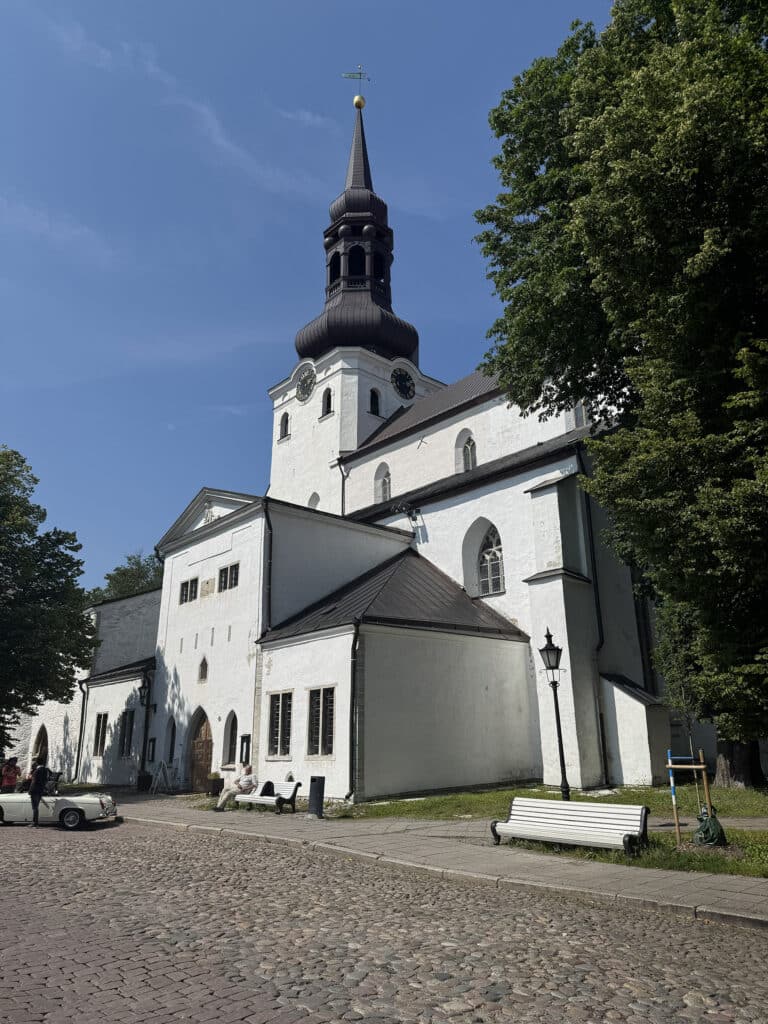
Up on Toompea sits St. Mary's Cathedral (Toomkirik, the "Dome Church") - the oldest church in Tallinn and on mainland Estonia, founded in 1219 and the only building on the hill to survive a devastating 17th-century fire. Its dark baroque tower is the shorter spire that's easy to confuse with St. Olaf's from a distance, but up close the two aren't alike at all - St. Mary's interior is essentially a gallery of centuries-old carved coats of arms and noble tombstones, direct physical evidence of exactly who lived up here: the bishops and Baltic German aristocracy who called Toompea home, in a church built for them rather than for the merchants below.
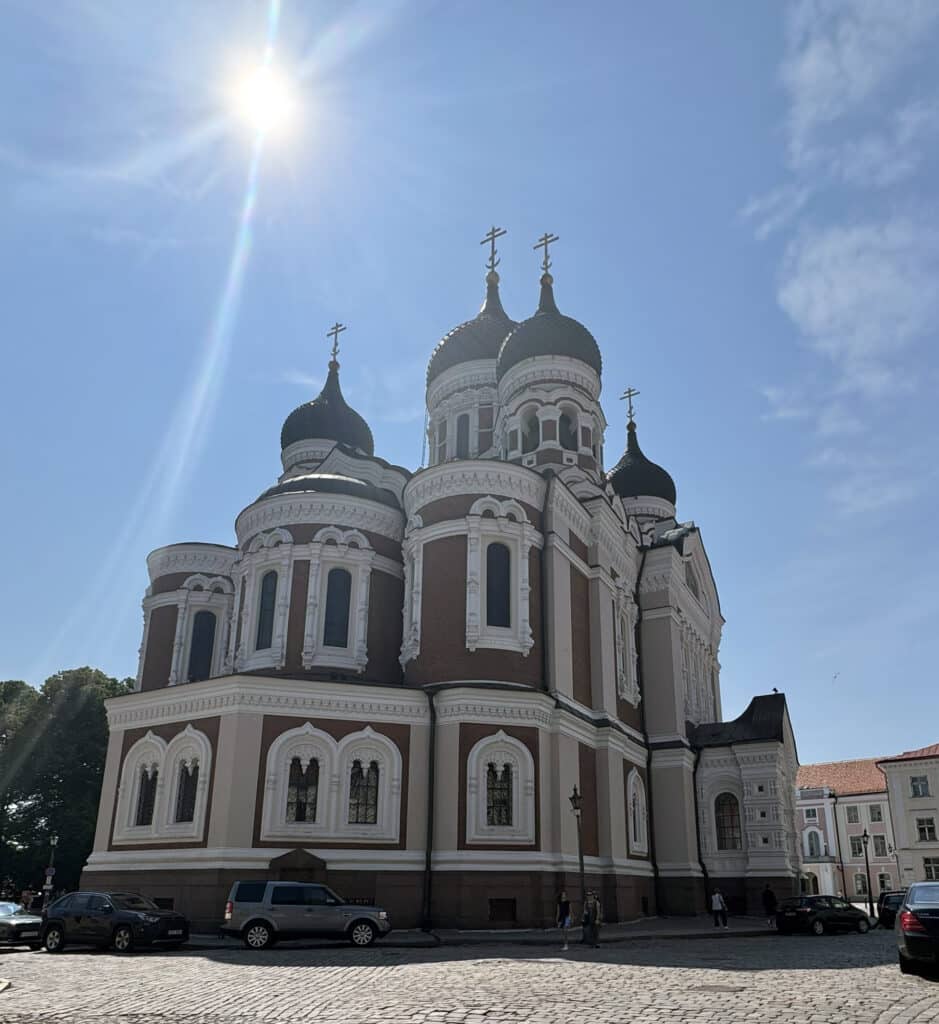
A short walk away, and impossible to miss, is the Alexander Nevsky Cathedral - five black onion domes that dominate the top of the hill. Confirmed: this is a genuinely loaded building, not just a pretty one. It was built between 1894 and 1900 during the Russian Empire's Russification campaign, and deliberately positioned facing directly across from what's now the Estonian parliament, as an unmistakable architectural statement of Russian imperial authority over local self-rule. Estonians disliked it enough that its demolition was seriously proposed in 1924 (never carried out, for lack of funds), and its ownership is still an active point of political debate today given its continued ties to the Moscow Patriarchate.
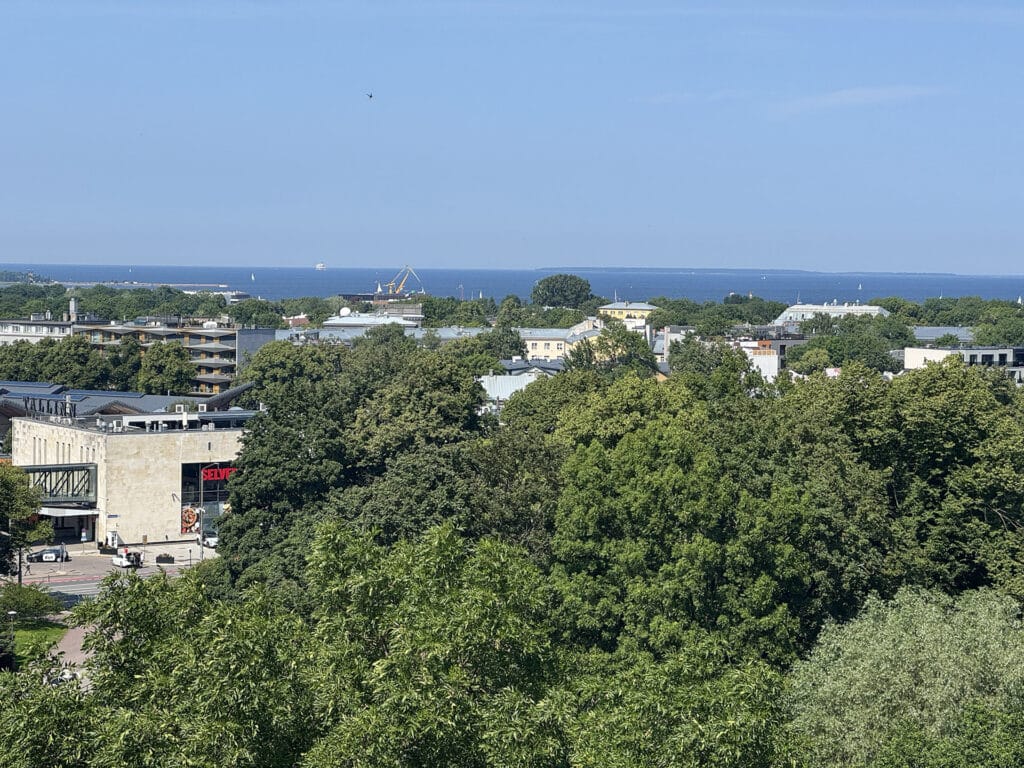
And yes - confirmed, Toompea does deliver on the view. From one of its lookout platforms, you get a clear sightline out past the modern high-rises and straight out to the Baltic Sea, with the harbor and passing ferries visible in the distance. It's a good spot to pause, get your bearings, and take in just how much history is stacked into one relatively small hill.
Heading Back
By late afternoon it was time to make our way back toward the harbor for the 6:30 PM return sailing - giving us a full, unhurried day in Tallinn without the stress of a tight morning departure or a very late arrival back in Helsinki.
What We Didn't Have Time For
A single day in Tallinn is enough to get a real feel for the place, but not enough to do everything - a few commonly recommended stops didn't make it into this trip, worth flagging for anyone planning their own visit or for a return trip of ours:
The Kohtuotsa and Patkuli viewpoints - two specifically named lookout platforms on Toompea, distinct from wherever we ended up standing for our own Baltic Sea view. Kohtuotsa in particular is known for "The Times We Had" wall, a popular photo spot we never crossed paths with.
Kiek in de Kök and the Bastion Tunnels - a fortification tower with an underground tunnel system running beneath the Old Town, frequently ranked among Tallinn's top attractions.
St. Catherine's Passage (Katariina käik) - a narrow alley lined with working artisan studios - glassblowers, ceramicists, and the like.
Freedom Square (Vabaduse väljak) - just outside the Old Town walls, often tacked on as a quick final stop.
None of it detracts from the day we had - if anything, it's a good excuse to go back.
Honestly, that's the bigger takeaway: Tallinn has enough packed into its Old Town alone that a single day only scratches the surface. If your schedule allows it, seriously consider turning this into an overnight trip instead of a day trip - both Eckerö and the other lines run late crossings specifically built for that. Old Town is genuinely walkable and compact, but it's also dense with history in every direction, and there's no rushing something like the KGB Museum without it feeling incomplete. There's also something appealing about imagining those same cobblestone lanes at night, lit up and quiet, without the daytime cruise-ship crowds - and there's no shortage of places to stay for it, either. Old Town itself is dotted with small boutique hotels tucked into centuries-old buildings, so staying the night doesn't mean sacrificing the medieval atmosphere to find a bed.
Worth Remembering
Tallinn earns its reputation as one of the best day trips in Europe precisely because it doesn't feel like a day trip once you're there - a genuinely different country, a genuinely different history, and a Old Town that still looks the way it did when Hanseatic merchants ran the place. Between the medieval streets, the sobering KGB history, and a hilltop view straight out over the Baltic, it's a lot of ground - literal and historical - to cover in a single €36 ferry ticket.
Related Content:
Explore and Discover



The Travel Tipster
I'm Ed Vasquez — The Travel Tipster. I've explored 35 countries and 100+ cities, almost always in a business class seat earned entirely through points. Firsthand destination guides, honest reviews, and practical points advice — from someone who has actually been there.