

Exploring Stockholm
Exploring Stockholm Beyond Old Town
Everyone tells you to see Gamla Stan, and you should. Exploring Stockholm still rewards wandering beyond it. The city spans fourteen islands, and water touches nearly every corner, so it holds far more than the guidebooks show. Here is what we found, in no particular order.
Södermalm and Mosebacke Terrassen
We took an Uber over to Södermalm for Mosebacke Terrassen. This terrace bar and music venue sits on a bluff above the neighborhood. Sweeping views stretch back across the water to the city. The crowd runs younger than what you will find in the center. Still, the view, the drinks, and the music make the trip worth it regardless.

The Mosebacke archway marks the entrance up to the terrace, tucked above Södermalm

A summer evening crowd fills Mosebacke Terrassen, drinks in hand as the sun dips low

Looking across from Södermalm toward Gröna Lund's rides and the rooftops of Djurgården
We walked back to the hotel afterward. The route ran uphill on the way there and downhill on the way back, which says something about Södermalm's terrain. Along the way, we stopped at the Hilton Stockholm Slussen's rooftop overlook. It gave us one of the best sunsets of the trip. If you find yourself in the area near dusk, the detour is worth it.

The plaza outside the Hilton Stockholm Slussen, one of the best sunset spots we found
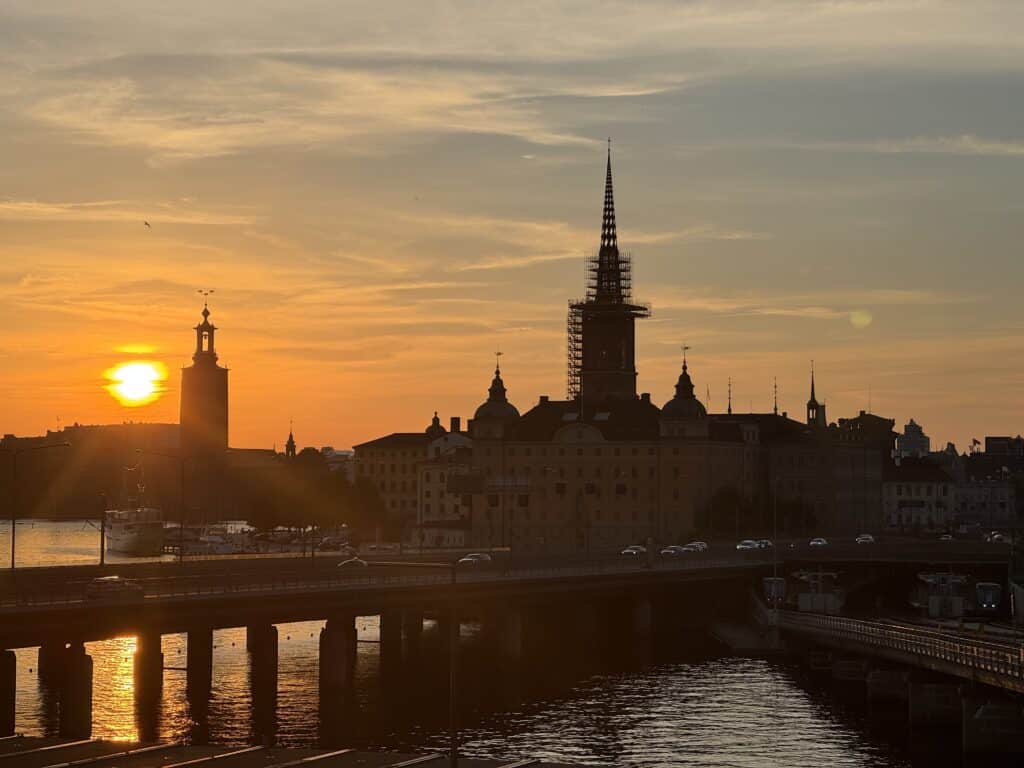
Riddarholmen Church's ironwork spire stands out against the last of the evening light

The sun drops right behind City Hall's tower, framed by the bridge and the water below
Ferry Line 80

The Royal Dramatic Theatre at Nybroplan, steps from where ferry line 80 departs
Our next venture exploring Stockholm took us to ferry line 80 out and back, boarding at the Nybroplan wharf. This small dock sits in Nybroviken bay near the Royal Dramatic Theatre and the NK department store, just a few minutes from the city center on foot. The ferry runs as regular public transit rather than a tour boat, so it operates on a normal ticket and a normal schedule.

Danvikshem sits high on the cliff above Danvikskanalen, its clock tower visible from the ferry
Line 80 heads out from downtown past Kvarnholmen, a small island built around a historic flour mill now converted to residential lofts. From there it continues toward Nacka Strand, a former industrial waterfront lined with office buildings and cliffside apartments.

A villa on Grindstigen perches on the cliff, looking out toward Nacka and Skuru Sound
Lidingo
The route then moves toward Lidingö, skirting the wooded shoreline of that island, where Fyrtornet Dalénum, known locally as The Lighthouse, rises as a striking 22 story tower clad in slate that shifts color like autumn leaves.

Fyrtornet Dalénum, known as The Lighthouse, rises above Lidingö in slate that shifts like autumn leaves
After that the ferry reaches Frihamnen, the free port and cruise terminal, and Ropsten, where the red metro line ends. The route continues further into the inner archipelago toward smaller stops like Ekudden and Frösvik for those who ride that far.

A villa with a turret sits above two small boathouses, seen from the water on the way out
Along the way you will see waterfront houses and boats of every size in the inner bay, along with glimpses of Djurgården's greenery across the water. The cliffs and converted industrial buildings of Nacka pass by, followed by the wooded edge of Lidingö. Eventually the city thins out and the archipelago's forested islands take over. The ride offers a cheap, unhurried way to see a side of Stockholm that most visitors never reach by bus or metro.

The full arc of Milles' fountain sculpture, with the Nacka Strand marina spread out behind it

Carl Milles' God Fader på Himmelsbågen arcs water skyward at the Nacka Strand harbor entrance
You will also pass one of the city's floating harbor pools near Stadsgårdskajen, outside the Fotografiska photography museum, complete with sun loungers, umbrellas, and a netted off swimming area in the water. These pools have become a popular Stockholm summer fixture in recent years, not just a passing novelty.

A floating harbor pool near Stadsgårdskajen, one of Stockholm's popular summer swimming spots
Skip the Hop-On-Hop-Off Boat
We are glad we skipped it. The line for the hop-on-hop-off boat ran absurdly long, and people stood in direct heat for what looked like a painful wait. Between the ferry line 80 experience and the archipelago tour below, we never felt like we missed anything.
Archipelago Tour on the M/S Vindhem
We also booked the SKS Tours archipelago boat tour aboard the M/S Vindhem out to Fjäderholmarna (tour details here). This route offers a better way to actually get into the archipelago if you want context and narration rather than a plain transit ride. Treat it as an addition to the public ferries, not a replacement for them.
Downtown Stockholm, the Opera House, City Hall, and the Water
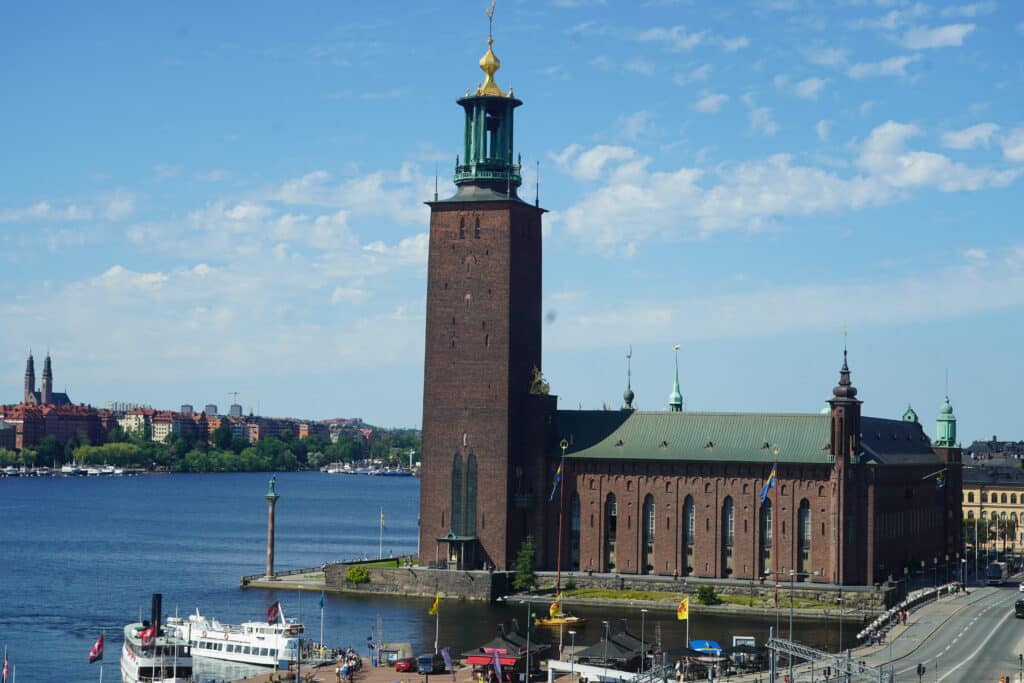
The tower is 106 meters tall and offers a spectacular panoramic view of central Stockholm.
Some of the best time we spent exploring Stockholm was not doing anything specific. The Royal Swedish Opera House and City Hall anchor the downtown waterfront, and the benches along the water in front of them make an underrated Stockholm institution. In summer, the days run absurdly long, and the light lingers into what feels like midnight. The crowd lingers too, out on those benches, while early mornings arrive just as fast.

Waterfront walkway next to Lake Mälaren, adjacent to central Stockholm.
Set aside time to sit by the river with a coffee or a drink and watch the city go by, since it ranks among the best free things to do in Stockholm. Do not miss af Chapman either, the historic three-masted ship moored permanently at Skeppsholmen. It now operates as a hostel and stands as a Stockholm landmark in its own right, and it makes one of the more photogenic stops on a walk along the water.
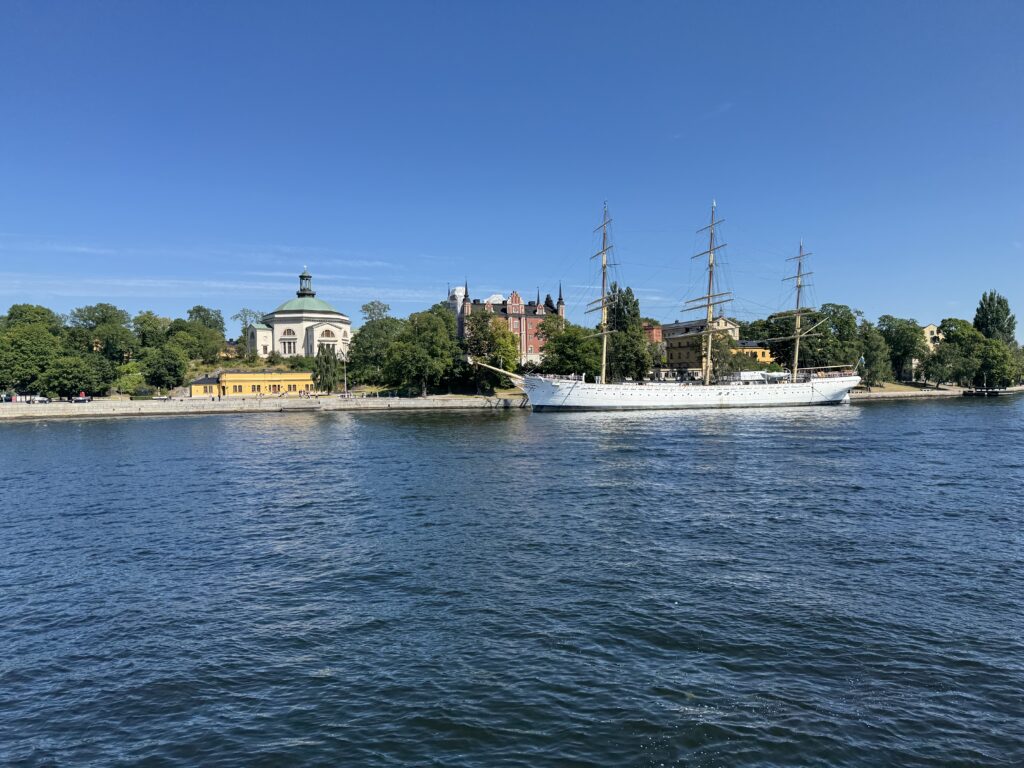
af Chapman sits permanently moored at Skeppsholmen, now a hostel and a Stockholm landmark
Strandvägen
Strandvägen stands as Stockholm's grand waterfront boulevard, lined with elegant buildings from the late 1800s and early 1900s facing the Nybroviken harbor. The street rewards a walk even without a destination in mind, since the architecture alone makes the draw. It also serves as the spot where sightseeing ferries and archipelago boats cluster to load passengers. Along the promenade, look for the John Ericsson monument, a bronze bust of the Swedish-American engineer atop a granite column. An allegorical seated figure sits below it, tucked into a small park near Nybroplan.

The John Ericsson monument, tucked into a small park near Nybroplan along Strandvägen
For Next Time, Exploring Stockholm Will Include...
We did not get to everything, and that is fine since a return trip is already half planned. Here is what stayed on the list, organized loosely by neighborhood and theme, for whenever we make it back.
The Södermalm Deep Dive
SoFo, short for South of Folkungagatan, sits at the bohemian heart of the city. Vintage clothing shops, local design boutiques, and independent coffee roasters fill the blocks here. A mid-morning fika, meaning coffee paired with a cardamom bun, feels like the right way to start exploring it.
Sunset Views from the Cliffs
Monteliusvägen runs along the cliffs of Södermalm as a wooden pathway, and it offers the city's best panoramic view of City Hall and the lake at twilight. Afterward, a relaxed dinner at a cozy Södermalm bistro rounds out the evening nicely. Pelikan comes recommended for hearty, traditional Swedish fare.
Fotografiska and the Blue Line Subway Art
Fotografiska is a world class contemporary photography museum set right on the water, and it deserves a full visit rather than a rushed one. On the way back, a single metro ticket also unlocks a self guided tour of the Blue Line stations. T-Centralen and Kungsträdgården stand out in particular, since both stations look carved from solid rock and painted by artists to resemble underground caves.
Waterfront Dining on Skeppsholmen
Skeppsholmen turns peaceful in the evening, and the island rewards a slow walk across it. Dinner at a restaurant overlooking the water makes a fitting way to end the day there. The S/S Stockholm also runs an evening dinner cruise around the central waterways, for anyone who wants the view from the other direction.
Östermalms Saluhall
This brick food hall dates to 1888, and it still functions as one of the city's grander places to eat and shop for food. It earns a slot on the list purely for the building itself, even before factoring in what is sold inside.
Drottninggatan and Vasastan
Drottninggatan runs as a pedestrian shopping street through the center, while Vasastan offers quieter parks nearby for a change of pace. A relaxed dinner afterward at a local gastropub or a wood fired pizzeria fits the mood well. Meno Mal comes recommended for the pizza.
A Day Trip to Vaxholm
Vaxholm serves as the gateway to the Stockholm archipelago, and the boat ride out takes about an hour through scenic water. Historic wooden houses line the town, and Vaxholm Fortress sits just offshore for anyone who wants a look at the old defenses. Lunch right on the harbor rounds out the day.
Drottningholm Palace
A historic ferry runs from the City Hall dock down Lake Mälaren to Drottningholm Palace, home to the Swedish royal family and a UNESCO World Heritage site. The baroque rooms inside are worth the tour, and the sprawling English gardens outside are worth just as much time. The Chinese Pavilion, tucked into the grounds, should not get skipped either.
An Ice Bar
Stockholm has more than one bar built entirely from ice, glasses included, and it stayed on the list as a novelty we never quite got around to. Next trip.
Day Trips Covered Elsewhere
Beyond the city itself, do not skip day trips to Gripsholm, Sigtuna, and Djurgården. You can reach Gripsholm by the S/S Mariefred steamship or by car and train. Each destination deserves its own writeup, but together they show just how much there is to do around Stockholm beyond Old Town's cobblestones.
Related Stories
Explore and Discover





The Travel Tipster
I'm Ed Vasquez — The Travel Tipster. I've explored 35 countries and 100+ cities, almost always in a business class seat earned entirely through points. Firsthand destination guides, honest reviews, and practical points advice — from someone who has actually been there.