

United Narrowbody Aircraft Comparison on Major Domestic Routes
Comparing United Narrowbody Aircraft Across Key Routes
I log more than 45 flights each year to maintain my United Premier Platinum status thus knowing which United narrowbody aircraft to take is critical for comfort. My travels take me across regional feeders, domestic narrowbodies, and international leisure routes. Booking the exact same cabin class on different United narrowbody aircraft can deliver completely different physical experiences. You feel this contrast immediately when connecting through major hubs. For instance, you might step off a new Airbus A321neo and then board an older Boeing 737 for the next leg.
Exit Row Realities on United Narrowbody Aircraft - Lateral Space and Working Room
I almost always pick an exit row seat. First, sitting in the second exit row protects my work area. The passenger in front cannot recline into my laptop screen. Second, the seat gives me extra legroom without sacrificing my own recline.
However, pitch measurements do not tell the whole story. I recently flew the reclining exit row on a new Airbus A321neo. Later, I flew the same row on an older Boeing 737-800. The difference surprised me.
The exit seat on the Boeing felt noticeably tighter at shoulder level. The Airbus cabin is about seven inches wider than the 737 cabin. As a result, each of the six seats in a row gains a little room. Published widths for United economy seats on the A321neo run from 17.5 to 18 inches. In contrast, most United 737 seats measure about 17.3 inches.
That gap sounds small on paper. Nevertheless, you feel it at the shoulder on a long flight. Furthermore, the narrower Boeing fuselage curves inward sooner at shoulder height in a window seat. Both rows offered great legroom, but the Airbus delivered more actual living space.
Under-Seat Bag Storage - The Backpack Reality Check
I travel with the Think Tank Airport Essentials backpack as my personal item. The bag measures 18 inches high, 11.5 inches wide, and 7 inches deep. United lists its personal item limit as 17 by 10 by 9 inches. Therefore, my bag runs one inch over in height and 1.5 inches over in width. However, it sits two inches under the depth limit. I bought it because it came close to the guideline while still protecting camera gear.
It always slid under the seat on older narrowbody aircraft. Yet newer cabins have changed the space beneath the seat.
On the new A321neo, my bag would not fit under the seat in front of me. The seat frame and the hardware beneath it left an opening I estimate at roughly six inches. As a result, my seven-inch bag caught on the frame immediately. Consequently, a bag built to the full nine-inch United depth would fare even worse.
Fortunately, the Boeing 737 MAX gave me more height to work with. I estimate the opening at about nine inches. The window seat floor track still pinches the width slightly. Nevertheless, the bag slides under successfully.
I asked an A321neo flight attendant about this shallow floor space. She explained that crews expect passengers to use the overhead bins for items that previously fit under the seat. The larger Airbus bins allow standard roll-aboard bags to sit on their sides. Consequently, that layout leaves bin room for backpacks.
The Next-Gen Label Reality -Marketing Versus Fuselage Heritage
Aviation marketing often hides uncomfortable truths behind slick branding. The term Next-Gen on Boeing 737-800 and 737-900ER aircraft makes me laugh every single time. There is nothing truly next generation about these airplanes today.
Boeing launched the Next-Generation program in 1993, and the first flight occurred in 1997. That means this technology dates back to the era of dial-up internet. More importantly, the basic fuselage width dates back much further. Boeing built every 737 around the 148-inch fuselage cross-section it developed for the 707 in the 1950s.
Consequently, passengers in 2026 sit inside cabin dimensions drawn up about seven decades ago. That legacy tube explains why the 737 feels tighter than its Airbus rival. Both aircraft seat six across in economy. However, the Boeing has several fewer inches to share among those six seats. Importantly, the same limit applies to the 737 MAX, because the MAX keeps the identical cross-section.
The Boeing 737 MAX 9 Experience

United Airlines Boeing 737 MAX 9 registration N37553 docked at Puerto Vallarta International Airport prior to flight UA 1070 to Newark.
I booked United flight UA 1070 from Puerto Vallarta to Newark operated with a 737 MAX 9, registration N37553. That airframe left the factory in 2023, so the cabin felt fresh and the engines stayed quiet.
However, exit row rules demand careful attention on this aircraft. Rows 20 and 21 are the exit rows. The window seat was unavailable, so I took seat 21D on the aisle.
Choosing row 21 proved essential. Row 20 seats do not recline, because row 21 sits directly behind them at the exits. In contrast, row 21 kept my full recline, and the fixed seats ahead protected my laptop screen. My left shoulder enjoyed the open aisle, while the middle passenger bordered my right arm. As a result, row 21 turned a five-hour flight into a productive mobile office.
Power and Fleet Connectivity - USB-C Ports and Starlink Upgrades
Device power options are changing rapidly across mainline aircraft. On the A321neo, United placed both USB-A and USB-C ports beneath the seatback screen. Additionally, shared power outlets sit below the seats. Retrofitted cabins on older aircraft add screens with the same USB ports. Therefore, you no longer need to reach down to the floor to charge a phone.
Inflight connectivity is also improving as United installs Starlink satellite internet across its fleet. The airline finished most of its regional jets first and began mainline installations in late 2025. However, availability still varies from one aircraft to the next. On the Starlink flights I have taken, the connection stayed fast and reliable from gate to gate.
Nevertheless, high speeds require passenger etiquette. On one flight, a traveler in front of me started an audible Zoom meeting. The flight attendant stopped the conversation immediately. United policy prohibits inflight voice and video calls. Notably, this is an airline rule, not a federal regulation. Passengers should follow it so the cabin stays quiet for everyone else.
You can check your aircraft before arriving at the airport. First, open your flight status in the United app. Then, look at the amenities listed for your flight. United flags Starlink there when the assigned aircraft has it. Still, remember that a late aircraft swap can change the answer.
United Narrowbody Aircraft Comparisons - The Older Airbus Veterans
Travelers often overlook the older Airbus A319 and A320 aircraft. United flies these airplanes on routes out of Denver, Chicago, and Houston. Many of them are more than 25 years old.
As a result, the onboard experience depends on retrofit status. Some cabins still require you to stream entertainment to your own device. In contrast, retrofitted cabins feature seatback screens, USB ports, and larger overhead bins.
Crucially, every one of these jets keeps the wider Airbus cabin. On the older cabins I have flown, my Airport Essentials backpack slid easily beneath the seat. Therefore, you can gain the wider cabin without losing your floor space. However, check again after a retrofit, because new seats can change the clearance.
Ranking Aircraft for Long Flights
Flight duration changes cabin priorities. On flights exceeding three hours, cabin width matters most to me.
First, the Airbus A321neo ranks as my best aircraft for long domestic runs. Its wider cabin eases shoulder fatigue. Additionally, the quiet engines and modern screens make transcontinental flights comfortable. My backpack must go overhead, but that leaves my legroom open.
Second, the Boeing 737 MAX takes the next place. It offers a newer cabin and lower engine noise. Most importantly, it left enough room under the seat for my personal item. However, its seats are no wider than those on older 737s.
Third, the older A319 and A320 follow closely. They offer the wider Airbus cabin and good floor storage. Nevertheless, amenities vary with retrofit status, so bring a tablet and a battery.
Finally, the 737-800 and 737-900ER rank last for long flights. They share the narrow 737 cabin, and many still fly with older interiors.

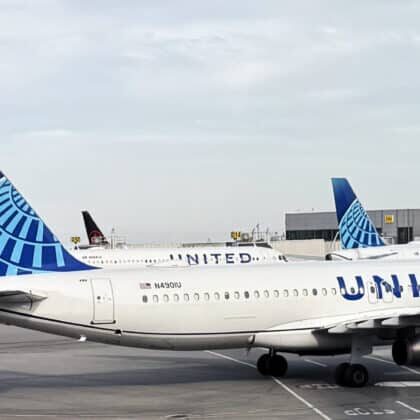
A United Airlines Boeing 737 MAX 8 receiving gate service, displaying the Advanced Technology winglet and scalloped LEAP-1B engine cowl.
Looking Ahead- The Boeing 737 MAX 10
United holds one of the largest orders for the upcoming Boeing 737 MAX 10. However, certification delays have pushed the jet back by years. Consequently, United has taken MAX 9 and Airbus A321neo aircraft in the meantime. Recent reports point to first deliveries in 2027.
United has not yet published a final cabin layout for this aircraft. Still, passengers can reasonably expect the current United interior. That means seatback screens, modern power ports, and larger overhead bins.
The MAX 10 will keep the standard 737 cabin width. Thus, expect economy seats of about 17.3 inches, similar to every other United 737. It cannot match the lateral space of the A321neo. Moreover, nobody outside the airline knows the under-seat clearance yet. I will measure it with my backpack once the aircraft enters service.
Ticket Pricing and Policies- The New Plane Myth
Many flyers assume United charges higher fares for newer airplanes. You might think an A321neo costs more to fly than an older 737 on the same route.
However, airline revenue systems do not set prices based on aircraft age. Base fares reflect route demand, departure time, and booking dates. In fact, the United A321neo holds 200 passengers. That extra capacity can keep lower fare classes available longer.
Additionally, newer aircraft burn roughly 15 percent less fuel per seat than the jets they replace. Consequently, they cost the airline less to operate. If your plans offer a choice between an older 737 and a new A321neo or MAX, choose the modern aircraft. You will get a newer cabin without paying extra for it.
Navigating Cancellations and the 24-Hour Rule
Understanding ticket flexibility matters just as much as choosing the right aircraft. Many travelers misunderstand federal cancellation protections. The Department of Transportation requires airlines to offer a 24-hour window on tickets booked at least seven days before departure. Within that window, an airline must let you cancel without penalty or hold the fare without payment. United offers the refund. Importantly, the rule covers tickets bought directly from the airline.
However, the rules change once you cross that deadline. After 24 hours, a non-refundable ticket generally converts into future flight credit, not cash. Still, one vital protection remains. If the airline cancels your flight or changes it significantly, you can decline the alternative and claim a full refund. That right applies even to non-refundable tickets.
Weather disruptions introduce another layer of complexity. Airlines frequently issue travel waivers ahead of severe storms and hurricanes. These waivers typically let you move your trip without a change fee or fare difference. However, you must usually keep the same cities, the same cabin, and travel within the dates the waiver lists. Therefore, checking for waivers can save money when severe weather threatens your trip.
Explore and Discover











The Travel Tipster
I'm Ed Vasquez — The Travel Tipster. I've explored 35 countries and 100+ cities, almost always in a business class seat earned entirely through points. Firsthand destination guides, honest reviews, and practical points advice — from someone who has actually been there.